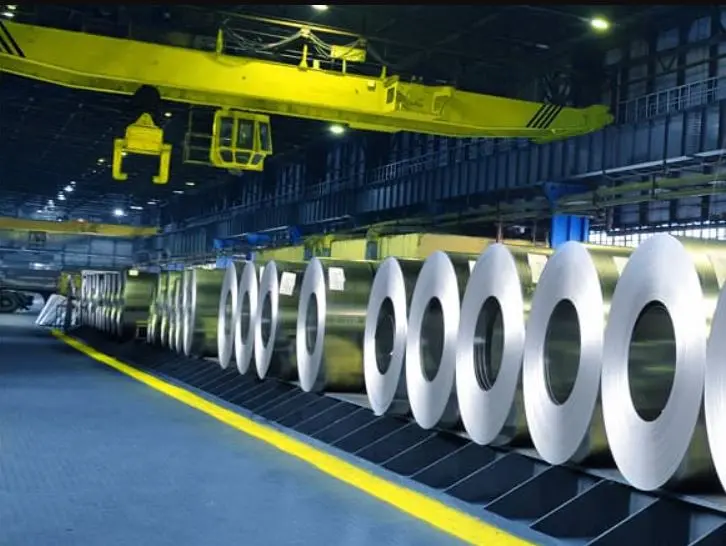
Hot rolled coil prices in the Indian domestic market were high at the beginning of 2025, but prolonged monsoons and abundant supply have led to steady declines since May, bringing prices below the levels seen at the beginning of the year.
The average monthly production volume of hot-rolled coils in India was 2.5-4.00 mm. The price of HRC, estimated by Argus, rose to 51,630 rupees per ton (US$569 per ton) in May, excluding Goods and Services Tax (GST), from 47,360 rupees per ton in January. The average price for December as of December 12 was 45,775 rupees per ton.
Wheat prices in India rose sharply between late February and early May amid speculation about protective duties and supply shortages caused by factory repairs. Since April 21, India has imposed temporary protective duties of 12%, which has led to a reduction in imports, especially from China.
Despite the[url=https://direct.argusmedia.com/newsandanalysis/article/2714850]decrease in imports, prices for HRC have been steadily declining since about mid-May. This was due to the fact that the monsoon season started earlier and lasted longer than expected. Demand slowly recovered after the monsoon rains, which, along with oversupply due to the expansion of domestic capacity, kept prices under pressure in the last quarter of the year.
As domestic demand struggled to keep pace with supply, Indian producers, faced with growing inventories, sought additional export opportunities in the second half of 2025.
India's HRC was exempt from anti-dumping duties in the EU, which led to a sharp increase in demand in Europe at the end of March, but activity decreased around August due to the summer holidays in the bloc. But since September, Indian factories have been able to sell significant volumes to Europe as buyers began to accumulate inventories ahead of changes related to the Carbon Boundary Regulation Mechanism (CBAM) and protective quotas expected in 2026. But prices remained under pressure as factories were forced to reduce supply to attract buyers amid uncertainty surrounding CBAM taxes.
Although the focus during this period was on Europe, Indian suppliers also sold some products to the Middle East and Vietnam. But these sales were concluded at much lower prices than in the EU, due to competition from China in these markets.
India became a net exporter of finished steel products in October and November as exports rose and imports declined on protective measures.
The interest of buyers in Europe decreased again towards the end of the year, as buyers tried to figure out the CBAM taxes after draft documents appeared on the market. India