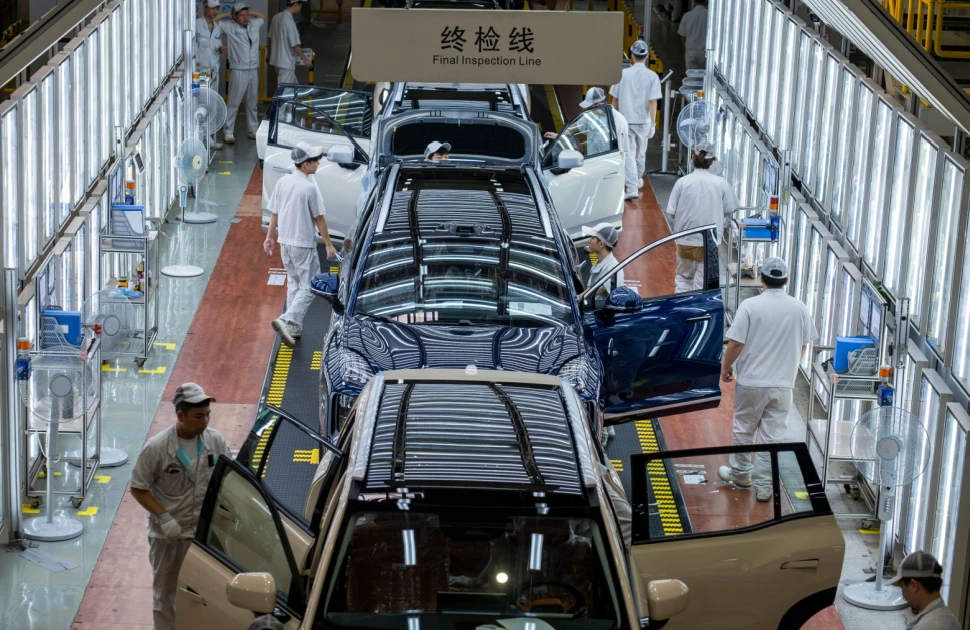
The impact of China's automotive sector on domestic steel consumption is projected to grow as exports accelerate by 2026.
As China's construction sector continues to struggle, the importance of a vibrant manufacturing sector remains central to the IMF's forecasts for 4.5% GDP growth this year. The automotive sector currently accounts for almost 10% of China's GDP. Sales of new cars in the domestic market in 2025 increased by 6%, to 24 million units. Industry forecasts show that sales volumes in China will decrease by 3-7% this year. However, exports will grow, which will allow manufacturers to maintain steel consumption supporting production.
In 2025, car production in China increased by 10.4%, to 34.5 million units. This growth was driven by an increase in the production of electric vehicles (EV) and plug-in hybrid systems, which increased by 29% year-on-year to 16.63 million units. Although production is expected to remain largely stable in 2026, foreign markets will become increasingly important amid the downturn in the global automotive sector.
UBS automotive sector analysts estimate that China's car exports will increase by 25% in 2026 from 5.7 m to 7.1 m units of measurement. The main driving force will be a 50% increase in electric vehicle exports. In addition, UBS expects China's car exports to grow to 9.4 million units by 2030, double the figure for 2024.
- This article is taken from the December issue of the European Parliament's International Steel Review. The monthly report provides subscribers with information on steel prices, indexes, market commentary, and forecasts from key global steel markets in North America, Europe, and Asia. Contact the MEPs for detailed information on how to subscribe.
BYD, Geely, Chery, and Great Wall Motors are among the automakers seeking to boost sales abroad. However, European and American manufacturers producing cars in China, including Tesla and Volkswagen, are also increasing production volumes.
China's domestic market accounts for about 30% of global new car sales. The 100 percent import duties imposed by U.
S. President Donald Trump have denied Chinese automakers access to the world's second-largest automotive market. However, the US is starting to stand out in its approach to Chinese electric vehicles.
A growing market for Chinese automakers
On January 16, Canadian Prime Minister Mark Carney announced an agreement that would allow the sale of 49,000 Chinese electric vehicles in the country at a tariff rate of 6.1%, which is significantly lower than the usual rate in