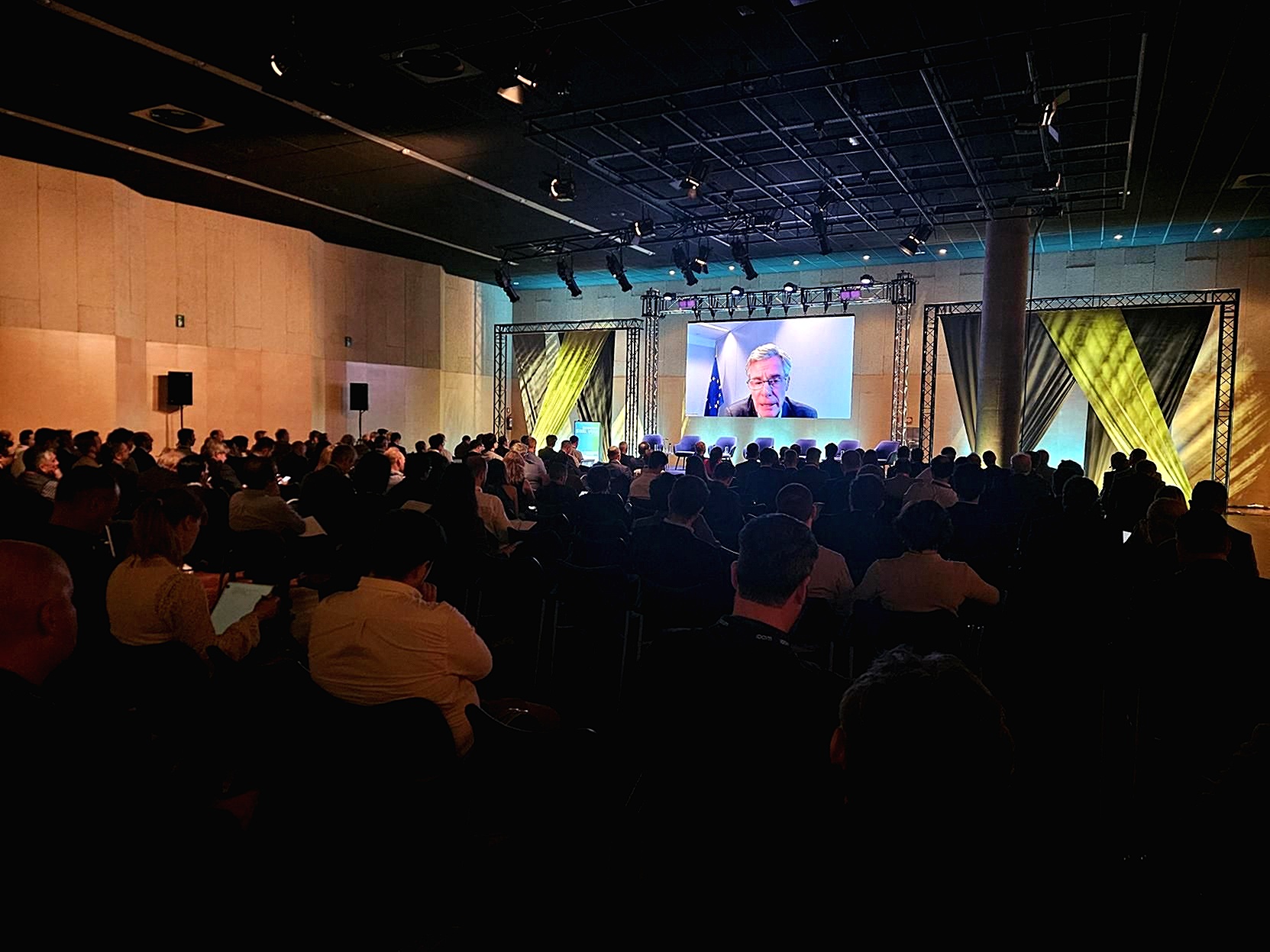
The European Commission's latest trade proposal, the steel smelting and casting requirement and CBAM are very important tools to support the European steel industry, says Leopoldo Rubinacci, Deputy Director General of the European Commission for Trade and Economic Security.
The steel sector is in critical condition at a time of uncertainty and geopolitical tension, and it is important to continue to protect it in order to ensure Europe has a competitive industry, he said at the Steel Tech 2025 conference in Bilbao on Tuesday, attended by Callanish.
According to Rubinacci, the steel industry is facing serious difficulties, many of which are not related to imports, as it is not self-sufficient. One of them is sluggish demand. "In times of relatively low growth, the situation becomes more complicated. There is a problem of very high energy costs and the problem of decarbonization, which European companies are closely facing and which will require large investments," he said.
Most of the conference participants considered overproduction in China to be a problem, as global capacity far exceeds demand. This imbalance leads to the restructuring of production, which leads to the closure of factories, layoffs and bankruptcy of entire companies. The delegates warned that the problem had reached an unacceptable level in Europe, as it was not only an economic but also a social problem.
Since 2018, the EU has taken protective measures that have helped regulate the market by imposing restrictions on free trade. These measures expire in June next year. "We did some calculations and decided to take action. We consider it important that the European Commission's proposal can replace precautionary measures without causing temporary disruptions. As for the timetable, the final decision now rests with the Council of Ministers and the European Parliament. The initial feedback we have received is very positive. Therefore, we hope that the legislative process will not be too complicated," Rubinacci explained.
The EU will have to negotiate with certain countries on possible compensation in order to mitigate the effects of the new measures and redistribute import quotas between 30 categories of goods.
"The first task is to identify our main suppliers. As in previous situations, we want to make sure that these main suppliers are aware of the specific circumstances. Why is this necessary? Because if we introduce a global restriction, the import quota will be applied on a first-come, first-served basis, which may give some countries an advantage over others," he said.