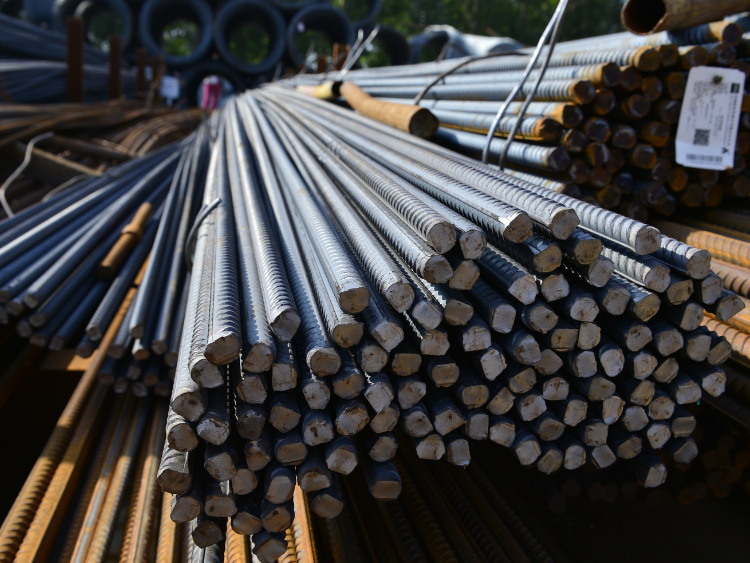
Relatively stable business environment in the global long products market, regional differences are more noticeable than ever
The overall business environment in the global long products market remains relatively stable. However, regional differences are more pronounced than ever. Protectionist measures in the United States, combined with the introduction of CBAM in Europe and the upcoming reduction of EU import quotas, are changing trade patterns and market dynamics.
Ongoing conflicts continue to create uncertainty and increase costs.
At the same time, the ongoing conflicts in Ukraine and the Middle East continue to create uncertainty, disrupt trade flows, and affect the balance of supply and demand in many regions. Higher oil and natural gas prices have increased transportation and production costs, while the supply of steel from suppliers in the Persian Gulf region has become extremely limited. The cost of marine cargo insurance has also increased due to increased geopolitical risks. Expectations that these disruptions would be short-lived have largely disappeared. As a result, many distributors and warehouse workers are holding back inventory due to concerns about future supply availability and the cost of replacing inventory. Consequently, the market remains highly fragmented, and conditions vary significantly depending on geography.
In the EU market, ahead of the introduction of the new quota system in July, there are last-minute purchases of imported goods. 1
In the European Union and the United Kingdom, the market is now beginning to seek a new equilibrium due to changes in the import regime from July 1. Over the past few weeks, some imported goods have been purchased at the last minute as buyers and traders tried to gain a favorable position before the new quota system took effect. After that, market participants will have to adjust their strategy based on the supply that is actually available on the market. Of course, these will still be imports, and competition will still exist, but buyers will have to build their strategies based on real market availability, rather than on the theoretical supply of the cheapest imports.
Scrap metal prices remain high despite weak demand
There is no demand that could support the continued increase in scrap metal prices, but it seems that prices will remain at the same level as before the Eid al-Adha holiday, or they may decrease by several dollars to motivate Turkish buyers to resume purchases. Scrap metal prices in Turkey remain above USD 400 per ton, despite low rebar sales in Turkey, while