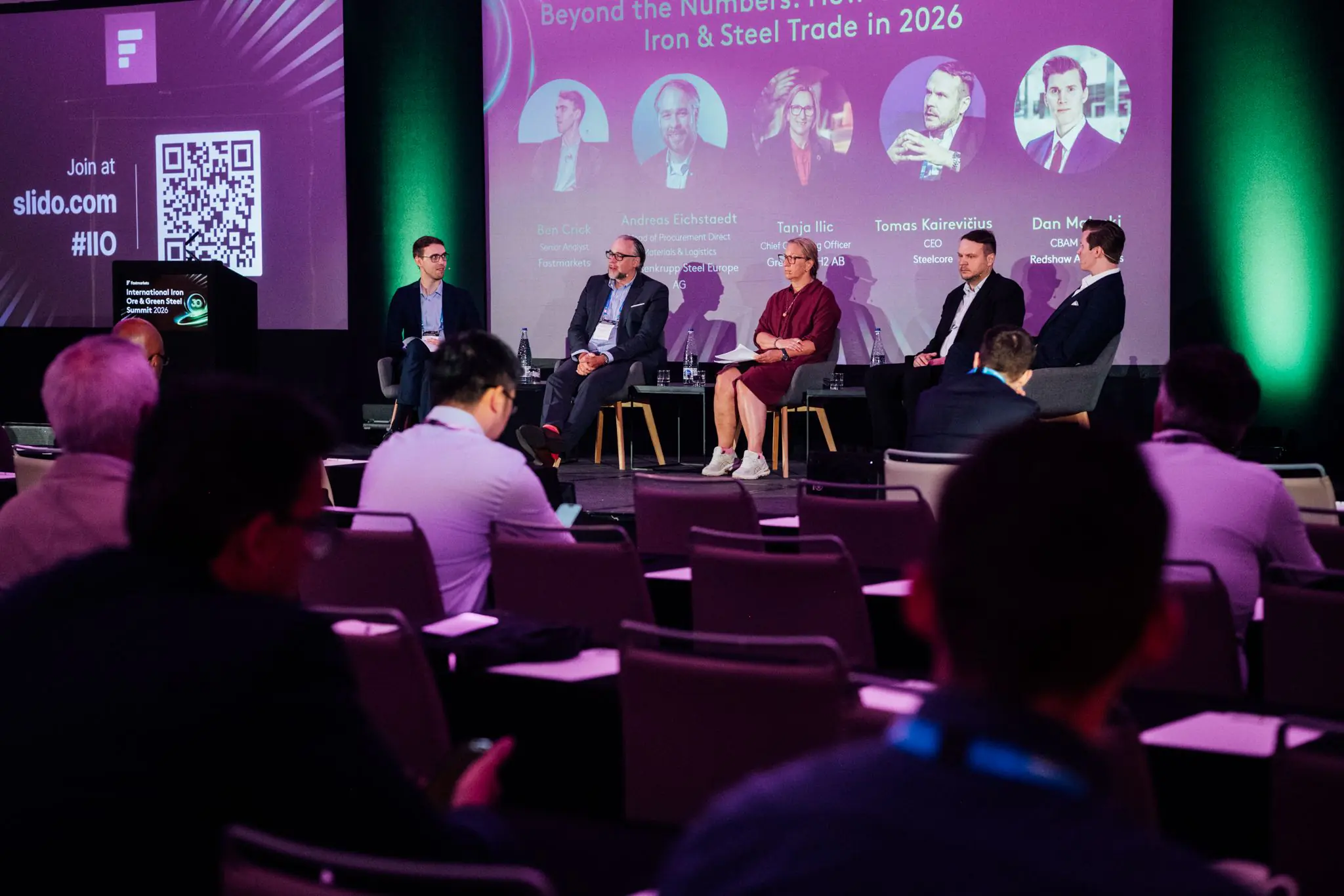
The growing wave of trade protectionism in the global steel market became the main topic of the Fastmarkets international summit on iron ore and environmentally friendly steel on Tuesday, June 23, where a group of experts discussed whether the growing regionalization of the industry is a temporary cycle or a permanent structural shift.
The era of hyperglobalization in the steel industry is over
A commodity analyst who participated in the discussion argued that the last two decades have been an anomaly, largely due to China's rapid growth.
"China dominates global trade by increasing exports," he said. "But what is changing is that economic growth is slowing down. It seems that this was before 2000. We are returning to a set of regional markets. Globalization was just an anomaly."
However, one economist attributed fragmentation not to market forces, but to regulation.
"Fragmentation was caused by lawmakers and politicians," he said, pointing to the unique regulatory trajectory in Europe, especially in the field of climate policy. "We're starting to become something of an island, because we want things to be done differently. It's inevitable."
A third panelist confirmed this shift from a commercial perspective, noting that purchasing decisions had fundamentally changed. "Previously, everything depended on prices. Now, due to trade barriers and other measures, purchase decisions are made by senior management, which makes them more strategic," he said, highlighting the growing focus on maintaining optionality and diversifying supply sources to increase supply chain sustainability.
Is the growth of Chinese steel exports cyclical or structural?
Much of the debate has focused on the role of China, whose steel exports have exceeded 100 million tons amid weakening domestic demand.
A commodities analyst described the move as structural, saying: "I have a negative view of China's economy and the demand for steel in China."
He noted that China's commodity saturation has reached its peak and that its steel industry is increasingly competing in global markets thanks to initiatives such as the Belt and Road Initiative.
Another participant in the discussion, commenting on the scale of this pressure, said: "China exports about 130 million tons per year. If we look at the world without China, consumption will be about 900 million tons. China exports about 15% of the products consumed in the rest of the world."
"Green" steel: a new trade barrier and its unforeseen consequences
The discussion also discussed how trade barriers go beyond traditional trade measures, and the climate


