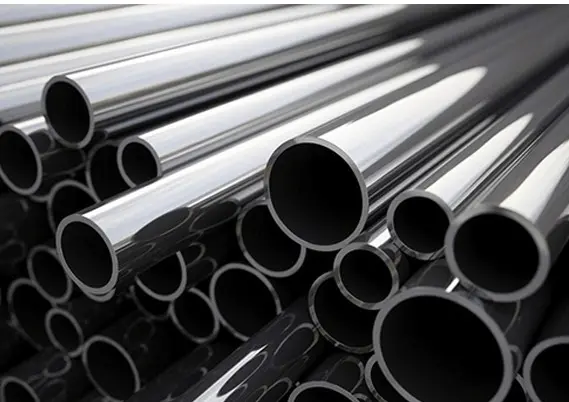
In industry, stainless steel products are chosen not only for their geometric parameters and cost. Equally important are the chemical composition of the alloy, its corrosion resistance, its ability to withstand mechanical loads, and its operational characteristics. The requirements are particularly high for materials that come into contact with moisture, chemicals, food or seawater.
One of the sought-after solutions for such tasks is AISI 316L steel. It is used in the manufacture of pipelines, process equipment, elements of production plants and various structures. In particular, AISI 316L round pipes are used where a combination of corrosion resistance, strength and processability is required.
Features of AISI 316L steel
AISI 316L refers to austenitic corrosion-resistant steels. The letter L in the designation indicates a reduced carbon content compared to the conventional AISI 316 grade. This feature is of practical importance in welding: it reduces the risk of intercrystalline corrosion in the heat affected area and allows you to maintain the performance characteristics of the material while observing welding technology.
An important difference of this brand is the presence of molybdenum. It increases the resistance to pitting and crevice corrosion, including when in contact with certain chloride-containing media. Therefore, the alloy is in demand in conditions where standard stainless steel may not be enough.
At the same time, corrosion resistance does not mean absolute immunity to any substances. The result of operation depends on the concentration of chemical compounds, temperature, duration of contact, surface condition and maintenance conditions of the equipment.
Chemical composition and influence of alloying elements
The performance properties of AISI 316L are determined by a combination of several main components. Each of them performs its own function:
- Chromium forms a protective passive layer on the surface, which prevents the development of corrosion.
- Nickel contributes to the formation of an austenitic structure, increases the ductility and manufacturability of steel.
- Molybdenum improves the resistance to local types of corrosion damage.
- Carbon in limited amounts helps to reduce the risk of intercrystalline corrosion after welding.
AISI 316L grade is characterized by a carbon content of no more than 0.03%. The specific chemical composition of the batch should be checked according to the manufacturer's certificate: the actual values must comply with the applicable standard and requirements for the supplied product.