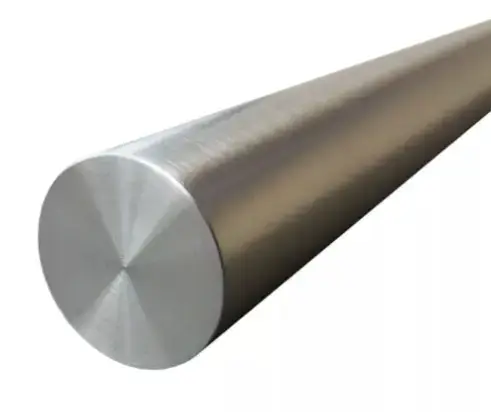
A stainless steel rod is a cylindrical or other profile of a metal billet designed for the manufacture of parts, structures and equipment elements. It is characterized by high strength, corrosion resistance and durability, which makes it a universal solution in industry, construction and mechanical engineering.
If you want to buy a stainless steel rod, it is important to consider the shape, diameter, grade of steel and processing method – these characteristics affect the service life and functionality of the product.
What is a stainless steel rod and why is it needed?
The rod is an all-metal billet, which can have a round, square, hexagonal or flat cross-section. It serves as the basis for the manufacture of various parts, fasteners, decorative elements and structures.
Advantages of stainless steel bar:
- corrosion and chemical resistance;
- high strength and durability;
- the ability to process and polish to the desired surface quality;
- maintaining performance even at high temperatures and humidity.
The main types and shapes of bars
The bars may vary in shape and cross-section.:
- Round – universal, suitable for most mechanical operations.
- Square – suitable for structural and decorative purposes.
- Hexagonal – used for the manufacture of fasteners and connecting elements.
- Flat – used for decorative and structural solutions.
There are also solid and hollow bars, where hollow bars are used to facilitate construction or save material.
Materials and grades of steel
The bars are most often made of stainless steel grades.:
- AISI 304 (08X18H10) is a universal grade, resistant to most environments;
- AISI 316 (10X17H13M2T) – resistant to aggressive chemical environments and seawater;
- AISI 321 (12X18H10T) – withstands high temperatures, suitable for heat treatment.
The choice of brand affects the durability, processing capability, and cost of the product. Marking and quality standards include DIN, ISO and GOST.
Dimensions and technical specifications
The bars differ in diameter or width, length, and size tolerance. Hollow bars are additionally characterized by wall thickness.
The effect of size on usage:
- diameter and thickness affect strength and rigidity;
- the length determines the possibilities for further machining;
- compliance with standards ensures compatibility with equipment and parts.


