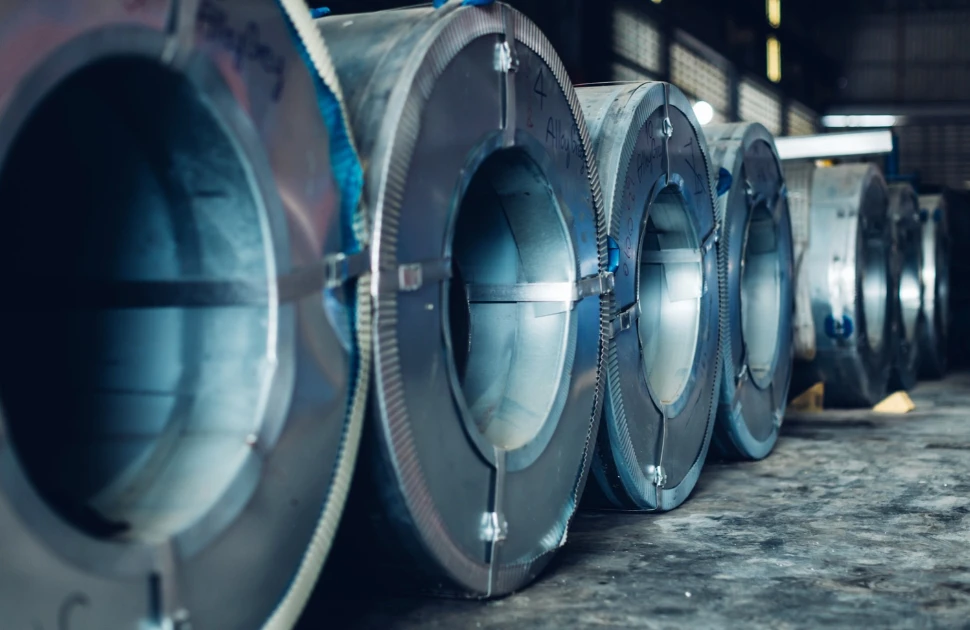
The European Commission has imposed definitive anti-dumping duties on imports of cold-rolled steel from India, Japan, Taiwan, Turkey and Vietnam. Rates reach 27.9%; the measures took effect on November 17.
The maximum duty, 27.9%, applies to imports of cold-rolled coil and sheet from Japan. The rate for Vietnam is 16%, and for India, 9.5%. Taiwanese producers listed in the regulation that cooperated with the investigation will pay 20.7%, while other suppliers will pay 27%.
Rates for Turkish companies vary: 3% for Tatmetal, 7.8% for Borçelik and suppliers not covered by specific conditions. Other producers that cooperated with the investigation received a rate of 4.9%.
The new duties add to existing import restrictions: reduced tariff-rate quotas and a 50% levy on shipments exceeding the quotas under the EU Steel Regulation, introduced on July 1. No provisional duties were applied during the investigation. Although imports have been registered since December 2025, definitive duties will not be collected retroactively.
The investigation lasted 14 months. The European Commission launched it in September 2025 following a complaint by European steel association Eurofer. According to the Commission’s findings, imports from the five countries rose by 28%, from about 1.3 million tonnes in 2022 to more than 1.6 million tonnes during the investigation period, which ended in June 2025.
Their share of the EU market increased from 16% to 23%, while the share of local producers fell from 70% to 66%. The average import price dropped by 34%, from 1,047 to 694 euros per tonne. The European Commission linked the lower-priced imports to falling steel prices and profitability at European companies: margins at the sampled producers fell from 10–15% in 2022 to 0–5%.
Many European importers suspended purchases of cold-rolled coil from the five countries, fearing high duties, according to a MEPS study for the European Steel Report. In 2026, cold-rolled coil prices in the EU were supported by a supply shortage. Study participants also attributed the shortage to limited domestic production and uncertainty surrounding the European Commission’s decision.
During the investigation, the Commission applied the concept of “particular market situations” for the first time when calculating dumping. This is usually done by comparing domestic prices in the exporting country with export prices. But if domestic prices or production costs are distorted, such a comparison may be unreliable.
The European Commission found distortions in India and Taiwan. In India, government intervention artificially reduced the cost of iron ore. In Taiwan, low-priced steel of Chinese origin put pressure on domestic prices and profitability. The Commission adjusted its calculations to account for these factors.
“The impact of China’s excess capacity is not limited to Chinese steel exports. The Commission found that cheap Chinese steel distorted Taiwan’s domestic market and affected the assessment of its exports to the EU. This shows how China’s excess capacity can reshape trade flows beyond the country itself and ultimately lead to restrictions on steel from other countries,” said MEPS steel market analyst John Carruthers-Green.
Exporters argued that the EU Steel Regulation already provides substantial protection for local producers. The Commission rejected this argument, saying that the regulation addresses the problem of global excess capacity, while anti-dumping duties target unfair pricing.
“The Commission’s position is that limiting import volumes and tackling unfair prices are separate objectives. The Steel Regulation limits the volume of material that can enter without a 50% levy, but that does not necessarily prevent dumping within the quotas. Anti-dumping duties can therefore apply even when quota volumes are still available,” Carruthers-Green added.


