In electroplating and chemical surface treatment, the precision of reagent dosing and the resistance of equipment to aggressive environments are crucial factors for the quality of finished products and the safety of technological processes. Electroplating baths contain solutions of acids, alkalis, heavy metal salts, and complex organic additives, many of which have high corrosion activity, abrasive properties, or a tendency to crystallize. Traditional pumps with mechanical seals, valves, and metal impellers quickly fail under such conditions, require frequent maintenance, and pose a risk of leakage of dangerous liquids.
Peristaltic (hose) pumps offer a fundamentally different solution based on the isolation of the pumped medium from the mechanical components of the drive. The working body of such a pump is a flexible hose or tube, which is successively compressed by rotating rotor rollers. The pumped liquid moves exclusively inside the hose cavity, without coming into contact with metal parts, seals, or lubricants. This principle provides a number of critical advantages for chemical processing and electroplating applications.
Design advantages
Chemical resistance and purity of the process. Since the medium is in contact only with the inner surface of the hose, the choice of hose material determines compatibility with specific reagents. Manufacturers offer hoses made of various elastomers — Santoprene, Norprene, EPDM, FPM, as well as special formulations for working with strong acids, alkalis, solvents and oxidizing agents. This allows the use of peristaltic pumps for pumping hydrochloric, sulfuric, nitric acids, ferride chloride, solutions for nickel plating, copper plating, chrome plating and other aggressive media, while maintaining the purity of the solution without the risk of contamination by metal wear products.
Absence of seals and valves. The peristaltic pump does not have oil seals, mechanical seals, check valves and other elements prone to wear, clogging or leaks. This virtually eliminates the risk of dangerous chemicals leaking into the work area. In the event of a rupture of the hose, no liquid flows outside the pump housing, which prevents environmental pollution and ensures the safety of personnel. Built-in leakage sensors allow you to detect a rupture at an early stage and automatically stop the pump.
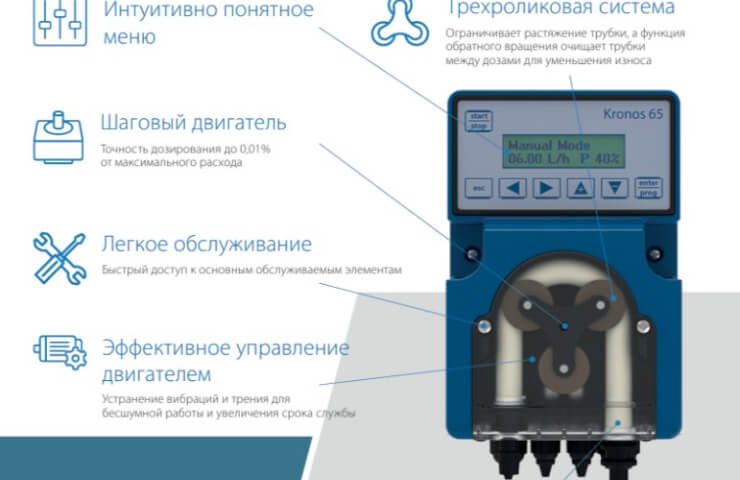
High precision of dosing. Modern peristaltic pumps equipped with stepper motors ensure accurate dosing