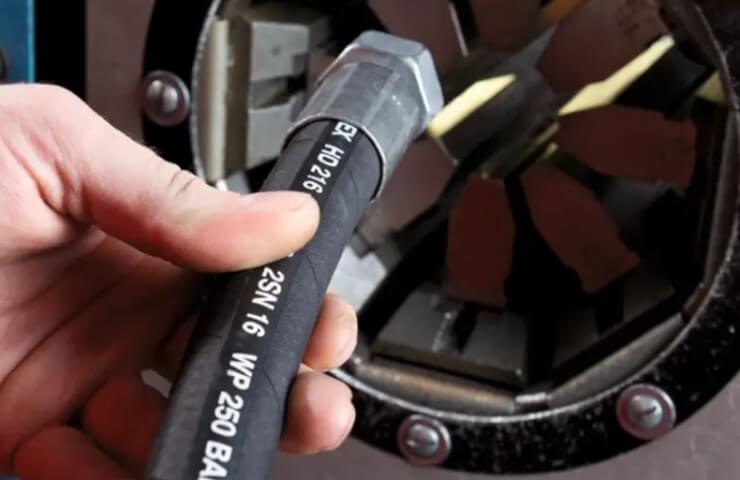
Choosing a high-pressure hose for a hydraulic system is an important task for engineers and purchasers working with industrial and special equipment. The reliability of the equipment, the safety of operation and the service life of the hydraulic system depend on the correct selection. In this article, we will look in detail at how to choose a high-pressure hose for a hydraulic system, taking into account the key criteria and application features.
Understanding the purpose and structure of high-pressure hoses will help avoid selection errors. You will learn which parameters to consider, how to correctly estimate the operating pressure and diameter of the hoses, as well as what to look for when choosing components for special equipment in various industries.
The main criteria for choosing a hydraulic hose
When selecting an RVR for special equipment, it is important to consider several key parameters. First of all, it is the operating pressure that the sleeve must withstand. It must be above the maximum pressure in the hydraulic system with a safety margin. Underestimating this indicator will lead to rapid wear and possible accidents.
The diameter of the sleeve affects the flow rate and flow rate of the liquid. Incorrect diameter selection can cause pressure drop or overheating of the hydraulic system. It is recommended to select the diameter based on the technical requirements of the equipment and the manufacturer's recommendations.
The material of manufacture and the design of the sleeve also play an important role. Reinforced hoses with several layers of rubber and metal braid are often used for special equipment, which provides resistance to mechanical damage and aggressive environments.
Features of the selection of RVDS for special equipment
Special equipment used in construction, agriculture, the oil and gas industry and other fields places special demands on hydraulic hoses. They must withstand high loads, vibrations and temperature fluctuations.
When selecting an RVR for special equipment, it is important to take into account the operating conditions. For example, in quarry conditions, the sleeves are exposed to abrasive particles and mechanical impacts, so reinforced models with a protective coating are preferred.
It is also necessary to consider the compatibility of the hose with the hydraulic fluid. Some types of oils and chemicals require special materials that are resistant to aggressive substances.
Working pressure and diameter of hoses: how to determine correctly
The determination of the operating pressure begins with an analysis of the technical characteristics of the hydraulic system. It is necessary to know the maximum pressure that occurs in the system during peak loads. A safety margin is added to this value, usually from 20


