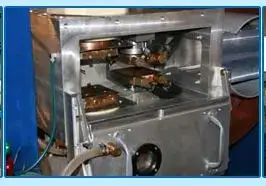
In the modern production of flexible copper jumpers, as well as many other important electrical products, the diffusion welding process occupies a special place. This method ensures the production of all-in-one joints of the highest quality, which are characterized by minimal transient resistance and exceptional mechanical strength. However, the diffusion welding process itself can be implemented on two fundamentally different types of equipment: semi-automatic and fully automatic. The choice between these two classes of machines determines not only product quality, but also productivity, production flexibility, required personnel qualifications and, ultimately, the economic efficiency of the entire enterprise. In this article, we will conduct an in-depth comparative analysis of semi-automatic and automatic diffusion welding machines to help you determine the optimal solution for your production tasks.
Before proceeding to the comparison, it is necessary to highlight the essence of the diffusion welding process itself in relation to flexible bridges. The technology consists in connecting copper cores with end tips under the influence of high temperature (about 800-900 degrees Celsius) and pressure in a vacuum or in a protective gas environment, without melting the base metal. As a result of atomic diffusion, a monolithic seam is formed at the interface, which is not inferior in properties to the base metal. This process requires precise control of temperature, time, pressure, and purity of the medium. And this is where the main differences between semi-automatic and automatic systems begin.
A semi-automatic diffusion welding machine is an installation in which a significant part of the operations is performed manually by the operator, and only some steps are automated, usually heating, vacuum generation and pressure metering. The operator independently loads the workpieces (the bundle of cores and the tip) into the welding chamber, sets them in the desired position, starts the heating and holding cycle, and then unloads the finished product. Parameter monitoring is often carried out according to instrument readings, and the operator can intervene in the process by adjusting the modes. An automatic machine, on the contrary, is a fully enclosed complex in which loading, positioning, welding and unloading take place without human intervention. All parameters are controlled by a programmable logic controller, and quality control can be performed by built-in sensors in real time.
The first and most obvious difference lies in the performance plane. The automatic machine is capable of continuous operation,