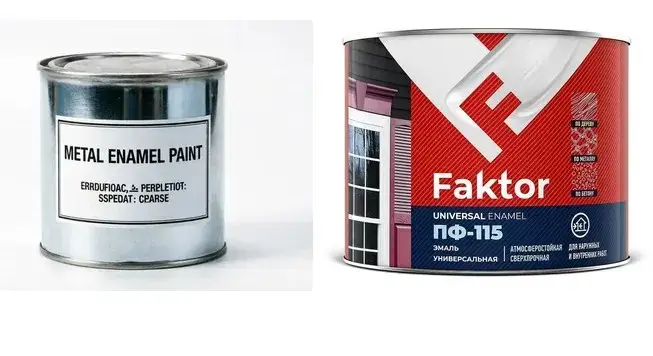
When it comes to the durability of floor coverings, be it soft carpet, solid board or modern laminate, it is customary to think first of all about the decorative layer. We choose the color, texture, pile height, or wood type, forgetting that the real battle for interior durability takes place at the rough floor level. In the search for the ideal method of fixing and leveling, one of the most powerful tools for improving reliability is often overlooked — the treatment of the substrate with special protective compounds. And here PF-115 enamel comes to the fore — a material that almost everyone knows about, but its potential is not always used.
Let's turn to a classic example: the process of laying carpet on a concrete or wooden floor. The standard instructions call for leveling, sanding, and dedusting. However, if you look closely at the physics of the processes, it becomes obvious that even perfectly smooth concrete or sanded board remains a chemically active medium. It is here that PF-115 enamel demonstrates its unique advantages, bringing the quality of substrate preparation to a fundamentally new level.
First line of defense: strengthening the structure
The main misconception is that the base for the flooring should simply be clean and dry. In reality, it should be monolithic. Concrete screed, no matter how strong it may seem, has a capillary-porous structure. Microcracks and pores are not just irregularities, they are potential foci of destruction. Under the influence of loads or vibration, the surface layer of concrete begins to "dust". The smallest particles of abrasive, which we used to call cement dust, remain under the carpet or substrate, working like sandpaper. They rub the bottom layer of the coating and weaken the adhesion to the glue.
The use of PF-115 enamel before laying any floor materials solves this problem dramatically. This compound, originally developed for the protection of metals and wood, has exceptional penetrating ability in relation to mineral bases. PF-115 does not just create a film on the surface — it penetrates deep into the capillaries, glues microparticles of cement or gypsum, turning the loose top layer into a solid, reinforced monolith. Imagine that you are not just closing the pores, but "cementing" them from the inside with an elastic resin. Due to this, the base ceases to be a source of dust, which is critically important for the very "correct removal of impurities" referred to in the carpet installation instructions.
In the case of a wooden floor, the situation is similar, but more complicated. Wood is a living, breathable material. Old floors often have areas with incipient rot or affected by microorganisms. Traditional