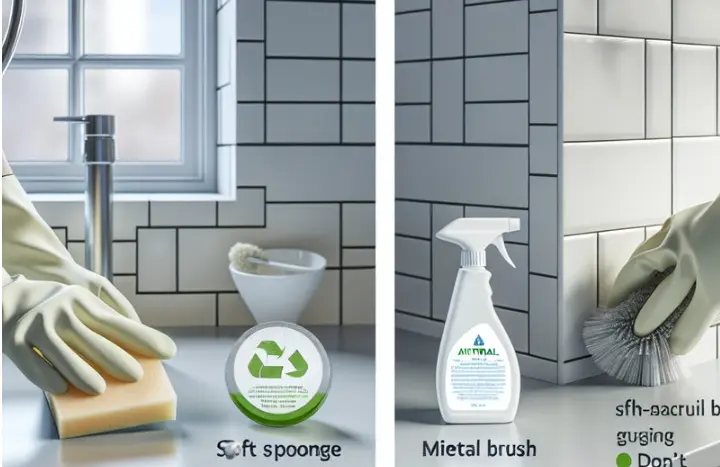
Kabanchik tile is the most brilliant classic that makes the kitchen and bathroom look neater than they really are. As soon as it gets covered with splashes of oil, limescale or soap stains, all the magic of the chamfer disappears immediately. The good news is that you can restore the original shine without aggressive chemicals and unnecessary nerves.
Why does the "wild boar" quickly lose its appearance
The chamfer works like a small lens: the light clings to every facet and generously highlights dust, droplets and prints. This is especially noticeable in the morning, when the sun hits the apron — suddenly every tiny drop is visible. Hence the main conclusion: gentle, but regular cleaning is more important than rare "generals".
What gets dirty most often
In the kitchen, there are greasy splashes around the hob, traces of sauces, soot from dishes. In the bathroom and shower there is a limescale and a soapstone. There is street dust and splashes of water next to the sink in the hallway. The source is different, but the approach is similar: do not rub until it creaks, but let the contamination disperse in warm water with the right remedy.
The basic ritual for every day
- It's dry at first. Walk over the tile with a clean microfiber cloth without water — this way you will not smear the dust into cloudy spots.
- Then it's wet. Spray a neutral solution (pH about 7) and let it work for 2-3 minutes.
- Rinse and wipe it off. Clean water and a soft cloth are enough to restore the shine. Do not be lazy to dry: drops on the gloss leave traces.
A small life hack: apply a warm, damp cloth to a stubborn plaque for a couple of minutes — after that, the contamination is removed many times easier.
How to beat Kitchen Grease
- Warm water + a drop of dish detergent. Spray, wait 3-5 minutes, wipe with a soft sponge. Repeat if necessary.
- Baking soda is spot-on. Mix with water to a paste, apply to the stain, lightly sponge and rinse immediately. Don't overdo it on the gloss: baking soda can leave microstrips if you rub for a long time.
- 70% alcohol will remove the traces of the marker and felt-tip pen. Drip onto a napkin, wipe the stain, then rinse with water and wipe dry.
Tip: if the fat is "baked", apply a paper towel soaked in a warm detergent solution for a minute — you will soften the film without the risk of scratches.
Lime scale and soapstone
- Vinegar 1:1 with water — only for the glaze. Spray, wait 5-7 minutes, sponge, rinse and dry. Vinegar is not allowed on natural stone or porous materials.
- Citric acid is more delicate. 1 teaspoon per glass of warm water. Apply quickly, do not leave it "for later".
- Heavy deposits will be removed by specialized products "for tiles" and "without abrasives". First, a test in an inconspicuous area is rule number one.
To make the plaque appear less often, keep it in the shower