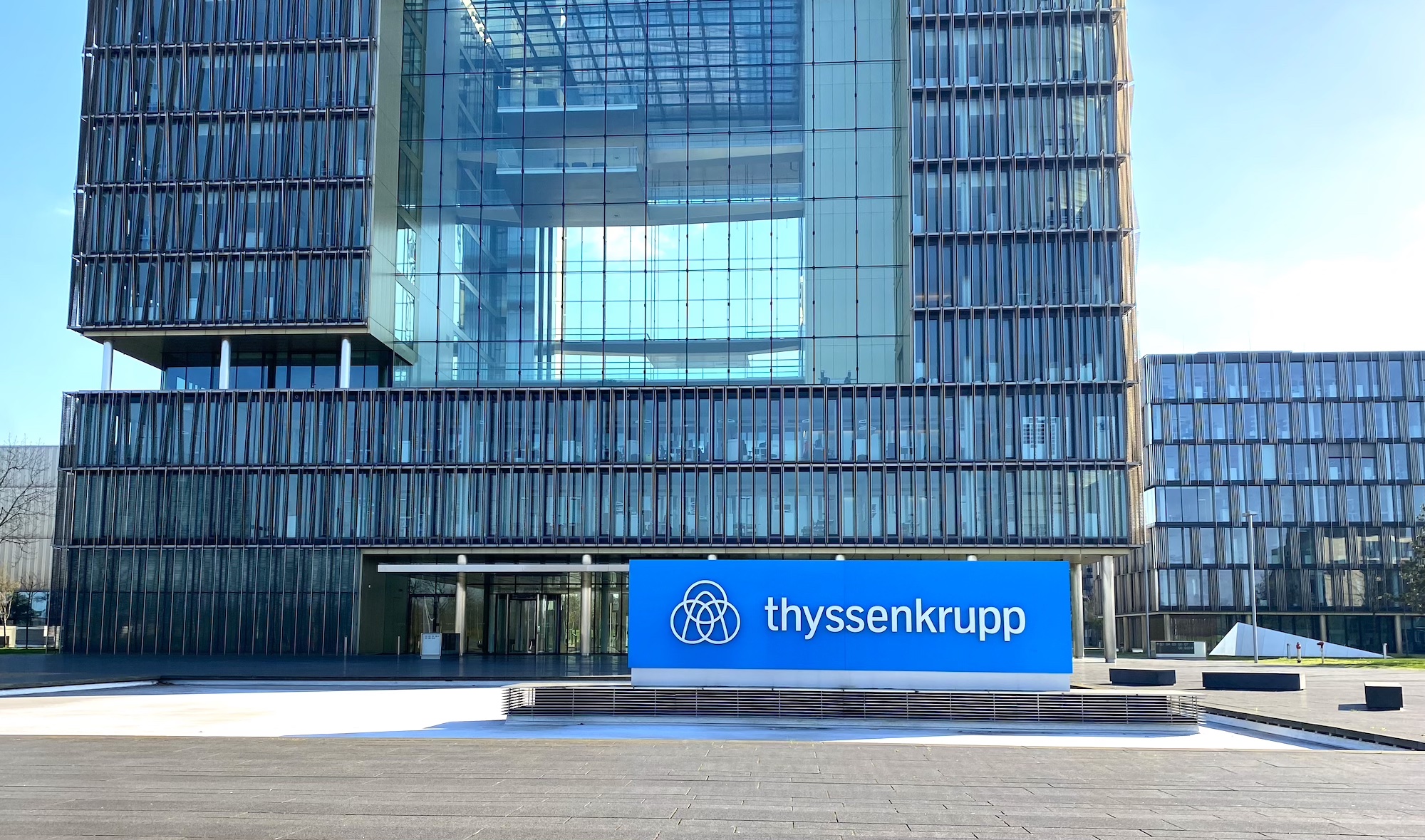
German steelmaker thyssenkrupp Steel said it had finalized the revised terms of government support for its tkH2Steel project in Duisburg. The company is preparing a new tender for long-term hydrogen supplies for a direct reduction plant with a designed capacity of 2.5 million tonnes per year.
thyssenkrupp Steel announced the completion of the funding terms approval process on October 30, 2026.
The changes were preliminarily approved by the European Commission, which found them to be in line with European Union state aid rules.
Under the revised terms, the company intends to gradually increase hydrogen use at the direct reduction plant, depending on market conditions.
Company to announce new hydrogen supply tender
thyssenkrupp Steel is preparing a new tender to secure long-term hydrogen supplies for the direct reduction plant. The process is expected to begin shortly.
The first tender helped the company gather data on hydrogen prices, available supply volumes and potential supply chains.
The new tender will take into account information gathered during the previous process, as well as the revised funding terms, the company said.
Once the direct reduction plant is commissioned, thyssenkrupp Steel expects to become one of Europe’s largest industrial consumers of hydrogen.
Funding terms adjusted to reflect hydrogen market conditions
According to the company, economic conditions have changed significantly since the initial funding decision.
Hydrogen production, the construction of pipelines to transport it and import infrastructure are developing more slowly than expected, affecting the project’s supply plans. The funding terms were also revised because green hydrogen prices have remained above initial forecasts.
The new terms allow the share of hydrogen used at the plant to be increased more flexibly, depending on its availability, economic viability and customer demand.
The plant is designed to run on natural gas, hydrogen or a mixture of the two. The company said that even if it uses only natural gas, the facility will be able to cut CO₂ emissions by more than 50% compared with current coal-based blast furnace steel production.
In the long term, the company intends to gradually increase the share of hydrogen and then switch to using it exclusively.
Plant to produce 2.5 million tonnes of direct reduced iron per year
The tkH2Steel project in Duisburg involves building a direct reduction plant capable of running exclusively on hydrogen, as well as two melting units.
The facility will have an annual designed capacity of 2.5 million tonnes of direct reduced iron (DRI). It is expected to cut CO₂ emissions by 3.5 million tonnes per year.
The company said that formwork and reinforcement installation, as well as the pouring of large volumes of concrete for the direct reduction plant tower and the two melting units, had been completed at the site. Construction is ongoing.
thyssenkrupp Steel Chief Financial Officer Philipp Conze said the revised funding decision provides the certainty needed to continue construction.
According to Conze, the timing of the facility’s commissioning will depend on current market conditions. However, the company’s goal of producing steel with lower CO₂ emissions in Duisburg remains unchanged.
Author: SteelRadar editorial team
steelradar.com