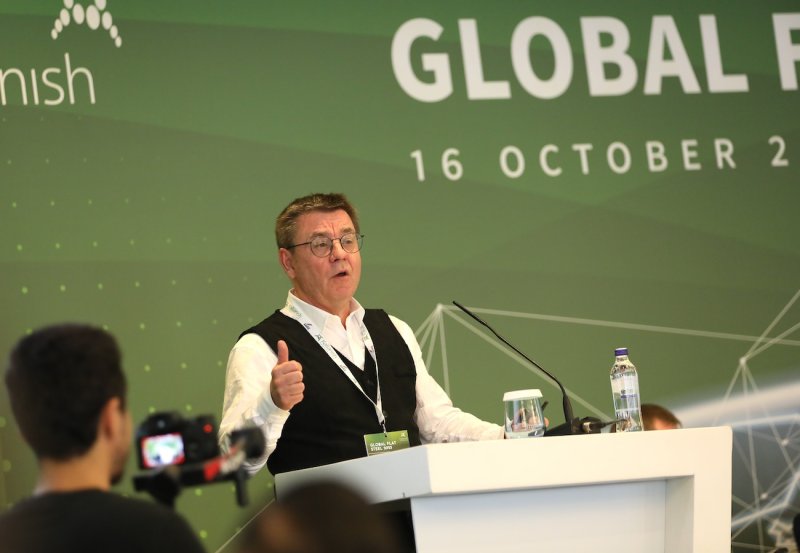
The transition to low-emission steel production, investments in new technologies and adaptation to the requirements of a more demanding market will be important for the development of the industry, said Gilles Mirol, Commercial Director of Hydnum Steel, during a discussion at the Kallanish Global Flat. The Steel Production Conference was held in Istanbul on October 16.
"We are innovators in a business environment that is currently facing serious challenges such as market protection,[Carbon Border Adjustment Mechanism]CBAM, and unfair imports. Defending c4apex is more difficult for a company that has already established itself in this sector than for a company like Hydnum Steel, because it has to transform its production, business model, etc., while being a new project is an advantage for us," notes Mirol.
The Spanish Hydnum Steel is one of the leaders in the industry. Steel (HS) is building the first low-emission steel mill in the Iberian Peninsula and will use non-fossil energy throughout the production process, followed by the gradual introduction of environmentally friendly hydrogen. The capacity of the plant for the production of rolled products will be 2.6 million tons per year, and it is expected that it will start operating in 2026.
By 2030, many steel companies will have to adapt to the new rules in the developed decarbonization market, where HS will occupy very advantageous positions.
According to Mirol, consumers are changing and becoming more demanding of innovative and eco-friendly products.
"We see a shortage in some products. Modern industrial projects require the supply of high-value-added steel, while the sale of low-quality materials will become increasingly limited. New companies producing low-emission steel have a great opportunity to become more important," he continues.
The paradigm shift in Europe is already spreading to other regions that are more conservative in their investments in technological advances.
"The future depends. We belong not only to the largest manufacturers with great investment opportunities, but also to the most flexible, to those who know how to anticipate trends and implement new technologies. The development of the steel industry is no longer inherited, it is programmed," he concludes.
Todor Kirkov Bulgaria
kallanish.com