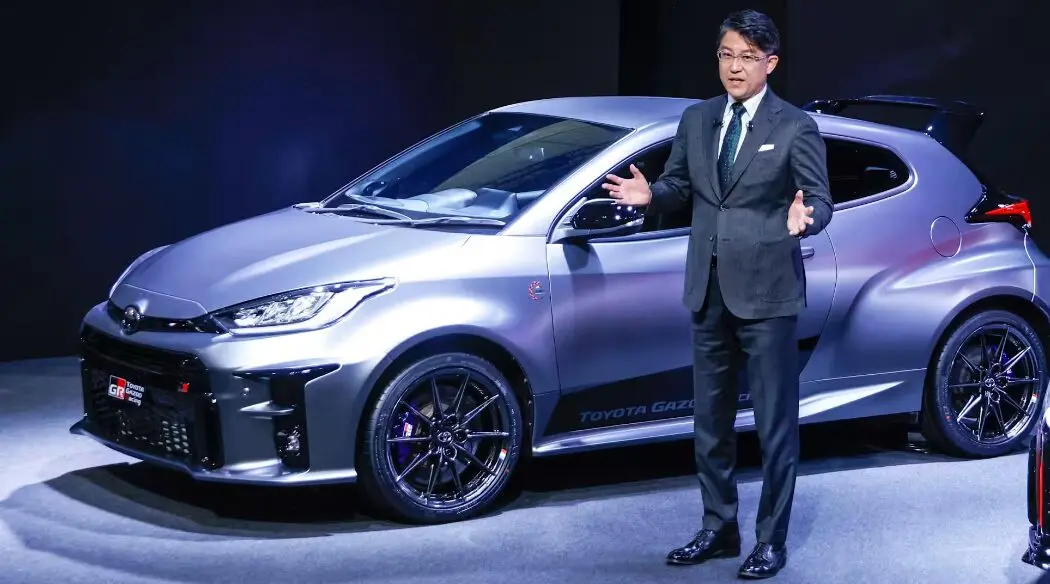
Japanese automakers are entering 2026 facing what they call an unprecedented test of their global competitiveness, while Toyota CEO Koji Sato, who has also been chairman of JAMA (Japan Association of Automobile Manufacturers) for a year,It warns of seven structural challenges threatening the long-term survival of the industry, according to Automotive News.
Speaking at the beginning of his term, CEO Sato emphasized that international competitiveness should be at the center of the industry's attention, urging automakers to unite around common strategies rather than relying on traditional strengths. He stressed that Japan's accumulated industrial data, advanced supply chain management, and logistics expertise are undervalued assets that can be enhanced with artificial intelligence. At the same time, he acknowledged growing vulnerabilities: dependence on imported critical resources such as rare earths and lithium; trade uncertainty caused by U.
S. duties and China's export controls; increased competition in electrification, software-controlled vehicles, and automated driving as Chinese and American players took the lead. The JAMA roadmap also includes a pragmatic "multi-step" approach to carbon neutrality, expansion of circular economy mechanisms, deep reform of Japan's complex and burdensome vehicle taxation system, as well as significant investments in human capital to attract global talent in software and semiconductors. Another priority is to increase competitiveness across the supply chain through standardization and scaling, especially after the recent shortage of semiconductors has exposed structural vulnerabilities.
Sato's appointment restores Toyota's influence at the head of a powerful lobby after a brief departure from tradition, underscoring the importance of the auto sector, which is the backbone of the Japanese economy and provides more than five million jobs.