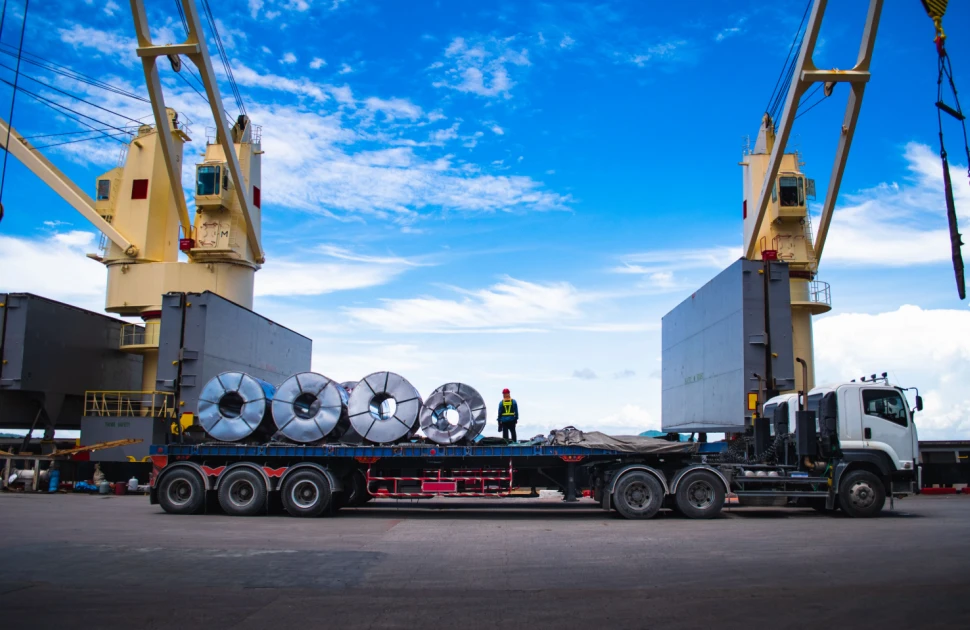
Steel buyers have criticized the "politicization" of trade defense this month as they await clarification of the new tariff quotas (TC) that will apply to imports into the EU and the United Kingdom from July 1.
The new strict tariff quotas will cut duty-free imports to the EU by 47% starting next month. Preliminary tariffs published by the UK Department of Business and Trade (DBT) on April 2 indicate a more serious reduction in this country by 60%. This happened despite concerns expressed by trade associations and manufacturers about the ability of British steel mills to meet domestic demand.
Both modes will be supported by tariffs exceeding quotas, which have been doubled to 50%. However, two weeks before the planned introduction of new trade protection measures, neither the EU nor the UK published the final country-specific TC.
Uncertainty about the possible effects of final tariff quotas on supplies and prices has caused procurement to stagnate this month. The MEPs' data on average prices in Europe shows that the upward trend in prices in the sector has also stalled. Only rebar and wire rod showed moderate growth in June.
Trade negotiations on tariff volumes are ongoing
As MEP respondents expressed disappointment at the lack of clarity, policy negotiations on tariff definitions for both the EU and the UK are ongoing.
The European Council formally approved the EU's new steel trade protection framework as law this month, but the countries continue to negotiate increased access to steel tariffs. Great Britain is among them.
More than three quarters of British steel exports go to the EU. Thus, the new strict quota restrictions will cause huge damage to the British steel sector, which is already in crisis.
British Steel and former Liberty Steel Speciality asset Steel UK have been placed under government control amid significant financial losses and there is a risk of closure. British Steel's activities cost the UK government 485 million pounds in the 11 months after it came under the control of the Chinese Jingye Group. Despite this, the company is striving to adopt a new bill on nationalization, which would allow the transfer of production under the permanent control of the government.
DBT argues that the reduced tariffs are necessary to protect British steel producers from cheap imports caused by global overcapacity. Nevertheless, British steel importers and end-users are lobbying for a relaxation of the preliminary requirements for specific products published