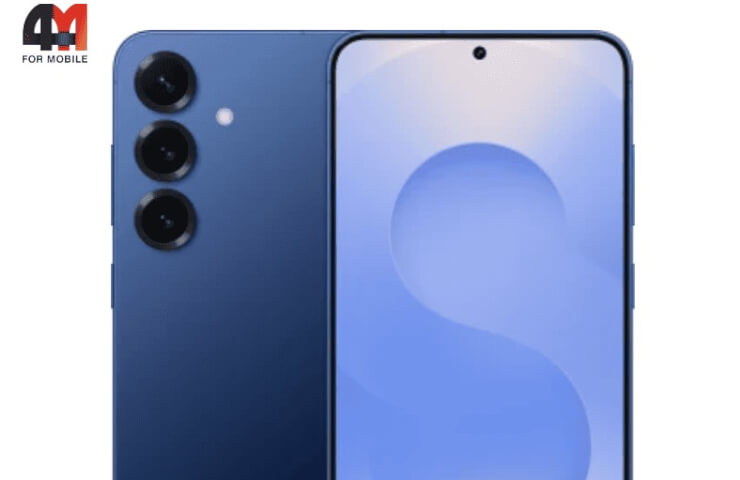
Over the past 10 years, smartphones have become an order of magnitude more powerful — but far from stronger. Today, even a flagship for 1,500 rubles can give up after one fall on a tile. Manufacturers promise "increased reliability," moisture protection, and "indestructible screens," but repair statistics suggest the opposite: the number of calls to services is only growing.
The problem is not in the brand or the user's karma — it's getting deeper. In this article, we'll look at why modern smartphones break down more often, how exactly users themselves accelerate wear and tear, and what can be done to avoid being left out of touch at the most inopportune moment.
Smartphones have become smarter — but not stronger.
The smartphone of 2025 is a pocket—sized supercomputer. Processors with power comparable to laptops, dozens of sensors, cameras with 100x zoom. But for all this technological progress, durability had to be paid for.
Modern gadgets have become:
— thinner — because the “design”;
— more glassy — because “premium”;
— it's more complicated inside — because the “functionality".
All this makes the smartphone vulnerable.:
-
Falls from 30 cm — the screen cracks,
-
Catches moisture — Face ID fails,
-
Overheats — the battery dies.
Add to this the massive “fashion” for wireless components (charging, headphones, buttons), and we get a device that is easy to ruin with a simple “bad day.”
This is especially true for Samsung Galaxy models — from the S-series to the FE. Their cases are often made of glass, the screens are minimally framed, and the camera modules protrude strongly. As a result, there are more risk points and more calls for repairs.
Why smartphones break down — and it's not just the manufacturers.
It's easy to blame brands for poor-quality assembly, “weak” components, and fragile screens. But in reality, everything is more complicated. Manufacturers create devices at the intersection of design, compactness and marketing. But users often “finish off” their gadgets themselves, without realizing it.
Here are some common “hidden killers” of smartphones.:
1. Charging with non-original adapters
One of the most common battery killers is Chinese “change—over” power supplies from China. They produce unstable voltage, overheat the phone, and shorten battery life by months.
2. Firmware updates "on the day of release"
System bugs after updates are a standard story. Some Android versions openly “break” Samsung models (especially the S10/S20 FE), causing overheating, camera crashes, and sensor failures.
3. Ignoring micro-damage
The user dropped the phone, it's working, and "well, okay." And in a month it will start: the screen does not turn on, the sound is buggy, the camera is “cloudy". Any fall is a potential internal risk.