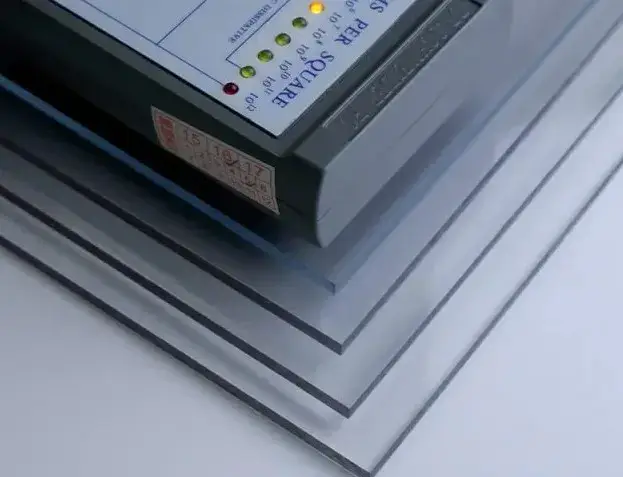
Transparent protective screens and viewing windows are an essential element of lathes and milling machines, machining centers, grinding and packaging equipment. They should allow the operator to see the processing area and at the same time hold the flying tool, the workpiece or its fragment. Monolithic polycarbonate is most often used for this task. Below are practical points that should be taken into account by the Chief mechanic's service and equipment designers.
Why polycarbonate and not acrylic
Polycarbonate deforms upon impact and absorbs energy, while acrylic (PMMA) splits with a comparable thickness and becomes a source of fragments itself. That is why, as a rule, acrylic is used in protective equipment fences only where there is no risk of impact, for example, in decorative covers.
The requirements for the impact resistance of fences are set by safety standards for specific types of equipment, such as ISO 16090-1 for machining centers and ISO 23125 for lathes, and the general requirements for the construction of fences are ISO 14120. The thickness of the screen is chosen not "by eye", but by the mass and speed of the object that can be thrown, and according to the requirements of the applicable standard.
The main enemy is coolant and detergents
Polycarbonate is sensitive to a number of lubricants, solvents and aggressive detergents. Under their influence, especially in stressed areas around holes and attachment points, stress cracking occurs: a network of small cracks that significantly reduces impact resistance, although the panel may look almost intact.
Therefore, when ordering the screen, it is worth specifying the coolant and cleaning products used and checking their compatibility with the brand of the sheet. In practice, a multilayer structure is often used in critical windows, in which polycarbonate is protected from the working area by an additional layer of glass that takes on coolant and chips.
Aging and planned replacement
The protective properties of polycarbonate decrease over time due to exposure to chemicals, ultraviolet radiation, repeated chip impacts and mechanical damage during cleaning. Equipment manufacturers usually indicate the replacement interval for the viewing windows in the operating instructions. A cloudy, scratched or cracked screen is not polished, but replaced.
It is a good practice to include in the maintenance regulations the date of installation of each window, the planned replacement period and the criteria for unscheduled replacement: cracks, turbidity, traces of chemical exposure, damage after an emergency impact.
Processing and installation
When making screens, it is important to avoid internal stresses: the holes are made with a sufficient margin from the edge, the edges are cleaned, and the fasteners should not