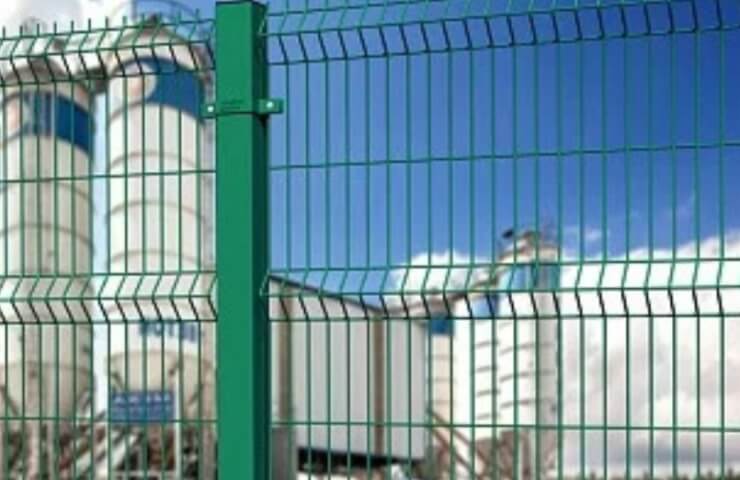
When choosing a fence for a private house, industrial facility, warehouse or public area, it is important to take into account not only the appearance of the structure, but also its durability, strength and ease of use. One of the most popular options today is 3d fencing panels, which successfully combine modern design, reliability and ease of installation.
Panel fences are made of galvanized steel wire by contact welding. Additional V-shaped stiffeners significantly increase the strength of the structure, and the protective polymer coating provides resistance to precipitation, ultraviolet radiation and temperature fluctuations. Such characteristics make it possible to use fences in various climatic conditions for many years.
Where 3D fences are used
Modern 3d fences are installed on a wide variety of objects due to the versatility of the design and high mechanical strength.
- private households;
- cottage settlements;
- manufacturing enterprises;
- warehouse complexes;
- schools and kindergartens;
- sports grounds;
- parking lots;
- commercial and administrative buildings.
Advantages of panel systems
The main feature of 3D panels are special bends that increase the rigidity of the structure without significantly increasing weight. Due to this, the fence withstands wind loads well and retains its geometry even during long-term operation.
- high structural strength;
- corrosion resistance;
- good visibility of the territory;
- Easy maintenance;
- quick installation;
- long service life.
Design features
The standard system includes metal welded panels, support posts, fasteners and, if necessary, gates or gates. The panels have the same width, which simplifies the design and speeds up the installation of fencing.
The open mesh structure provides natural ventilation of the territory and does not create a sense of enclosed space, which is especially important for sports facilities, public areas and suburban areas.
What to look for when choosing
When buying, it is recommended to consider several technical parameters:
- diameter of the steel bar;
- the thickness of the protective coating;
- the height of the panels;
- type of fasteners;
- quality of galvanizing;
- compliance of the design with the operating conditions.
It is also important to choose the right type of support posts and the way they are installed.