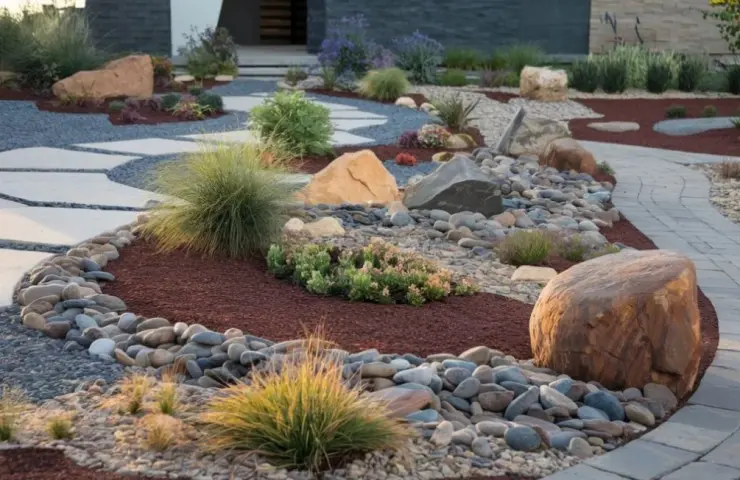
Decorative sprinkling helps to quickly transform the garden, emphasize the shape of flower beds, paths and recreation areas. With its help, you can create a neat background for plants, protect the soil from drying out and reduce the number of weeds. The modern market offers a variety of materials, differing in color, texture, origin and features of operation. The choice depends on the purpose of the site, the general style of the territory and the requirements for care.
Stone materials
The most durable option is natural stone. Stone for filling flower beds is used to decorate flower beds, trunk circles, rockeries and alpine slides. It does not rot, does not fade in the sun and retains its decorative effect for many years. Fractions from 5 to 20 mm in size are suitable for small flower beds, and large stones can be used as separate accents.
The pebbles have a rounded shape and a pleasant smooth texture. It looks good near ponds, fountains, garden paths and in Japanese gardens. White, gray or colored pebbles allow you to create patterns and contrasting compositions. Before laying, the surface is cleaned of weeds, leveled, covered with geotextile and the material is covered with a layer of 4-7 cm.
Marble chips are appreciated for their expressive appearance and a variety of shades: white, cream, pink, greenish and gray. It reflects sunlight, visually makes the area brighter and is suitable for decorating formal areas. However, marble can change the acidity of the soil, so it is not recommended to use it near plants that prefer an acidic environment, such as rhododendrons and conifers.
Stone filling is used not only for landscape design, but also for practical tasks. It prevents the fruits from contacting the ground, reduces the splashing of dirt during rain and facilitates the maintenance of the territory. To prevent the stone from mixing with the ground, it is important to use a separation material and periodically remove leaves and debris from the surface.
Decorative bark and tree mulch
Larch bark is especially suitable for natural gardens. Its warm brown-red hue harmoniously combines with the greenery of shrubs, conifers and perennials. The bark retains moisture in the soil, protects the roots from overheating and gradually decomposes, improving the soil structure.
The bark of Siberian larch for mulching is available in different fractions. Small is suitable for flower beds and container plantings, medium — for trunk circles and shrubs, large — for decorative areas and paths. Before use, it is advisable to remove weeds, apply fertilizers and spread the bark in a layer of about 5-8