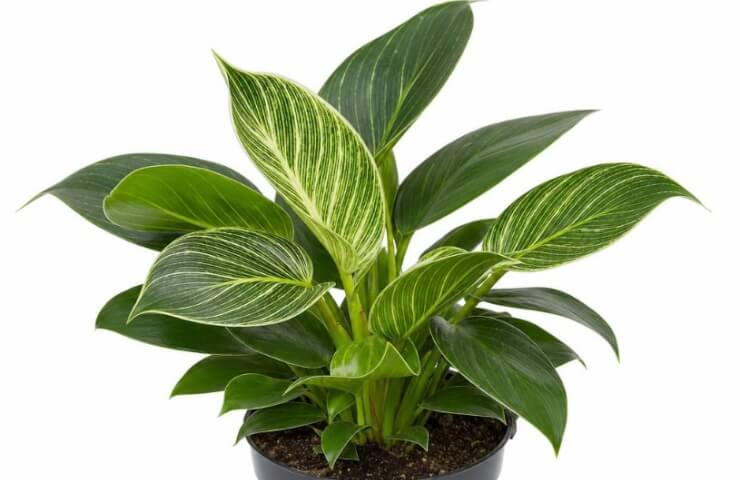
Philodendron is a popular deciduous ornamental plant that is appreciated for its expressive leaf shape, variety of varieties, and ability to blend harmoniously into different interior styles. It is grown at home, in offices and winter gardens, used as an accent plant for decorating the living space. Depending on the variety, the leaves can be large and dissected, heart-shaped, elongated or decorated with unusual shades and patterns.
How to choose a philodendron for your home
When buying, you should pay attention to the condition of the leaves, the strength of the shoots and the absence of signs of pests. Compact varieties are suitable for small spaces, and large varieties can become an expressive accent in a spacious room. When choosing a plant, consider not only its appearance, but also the available space for further growth.
You can view different versions of this deciduous ornamental plant and find a suitable specimen in the philodendron catalog. With proper care, it is able to maintain attractive foliage for a long time and become a prominent part of the home plant collection.
Variety of species and varieties
Philodendrons differ not only in appearance, but also in the nature of their growth. Some varieties form compact bushes, others develop long shoots and look good in hanging pots or on special supports. Large-leaved forms are suitable for spacious rooms, and small plants can be placed on a shelf, desktop or windowsill with diffused light.
When choosing, it is worth considering the size of an adult plant, the color of the foliage and the features of care. Due to the variety of shapes, philodendron is easy to choose for a minimalistic interior, as well as for a room with a large number of ornamental plants.
How to care for philodendron at home
Philodendron is considered a fairly unpretentious plant if it is provided with suitable conditions. It feels best in bright ambient light, away from direct sunlight. The plant prefers warmth, does not like cold drafts and develops well at normal room humidity.
Philodendron should be watered after the topsoil has dried. The soil should remain moderately moist, but not swampy, so the pot must have drainage holes. A loose, breathable substrate that does not retain excess water at the roots is suitable for planting.
Transplanting and maintaining decorativeness
As the philodendron grows, it may need to be transplanted into a slightly larger pot. Climbing varieties benefit from a support along which the shoots can