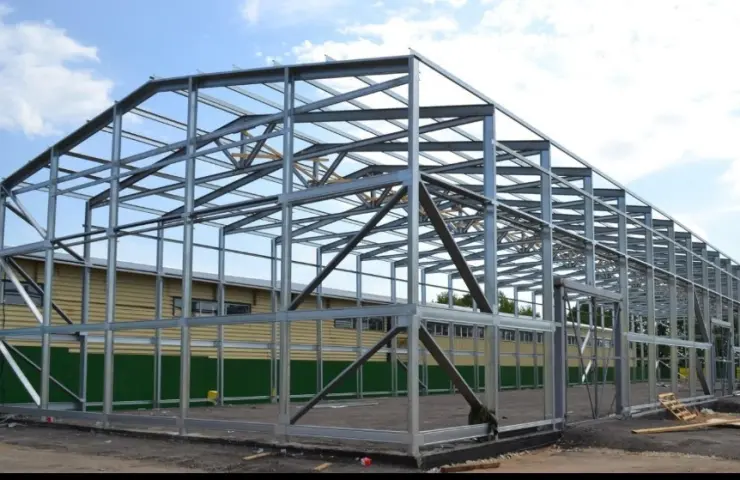
Prefabricated buildings are a modern construction format based on the use of pre—fabricated structures that are assembled on site as soon as possible. Solutions such as prefabricated buildings are actively used in industry, logistics, trade, and agriculture due to their high installation speed and cost-effectiveness. Such technologies are actively being developed and applied by a specialized manufacturer of metal structures, including companies at the Centerstal level operating in the frame construction segment.
Construction and principle of construction
The basis of prefabricated buildings is a metal frame, which forms the supporting structure of the object. Next, it is sheathed with enclosing materials — most often sandwich panels or a profiled sheet.
This technology allows you to:
- to assemble a building according to the principle of the constructor
- minimize "wet processes"
- work all year round without seasonal restrictions
- accelerate the commissioning of the facility
In fact, most of the elements are manufactured at the factory, and only installation is performed on site.
The main advantages of prefabricated buildings
The popularity of such structures is due to a number of engineering and economic advantages.:
- Construction speed — construction time is reduced several times compared to capital buildings.
- Cost—effective - less foundation and construction costs
- Design flexibility — the ability to adapt to a warehouse, hangar, workshop or retail facility
- Scalability — simple area expansion if necessary
- Seasonality does not affect installation — construction is possible in winter and summer
Where prefabricated buildings are used
Due to the universal design, such objects are used in a wide variety of fields.:
- industrial workshops and plants
- warehouse complexes and logistics centers
- agricultural hangars
- shopping pavilions and shopping malls in the light format
- sports facilities and hangars for equipment
A separate advantage is the ability to quickly deploy infrastructure in new territories without lengthy capital construction.
The role of metal structures in building reliability
The key element is the steel frame, which ensures the strength and stability of the structure. Modern production technologies make it possible to create unified elements, which speeds up installation and improves assembly accuracy.
Additionally, metal structures undergo anti-corrosion treatment, which increases the service life of the building and reduces maintenance costs.
Pre-built