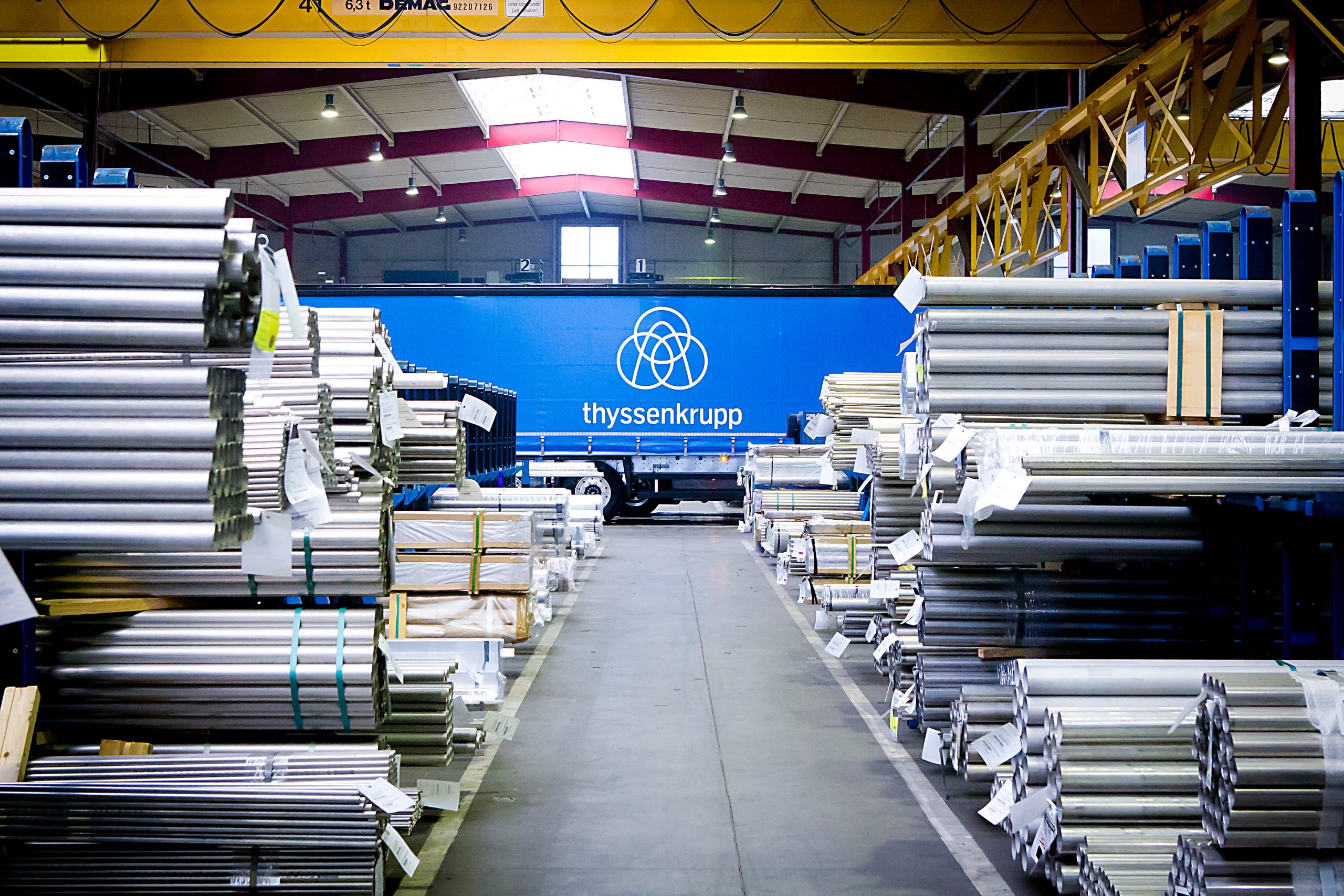
Thyssenkrupp Steel is investing in the construction of a new testing laboratory at its Schwelgern plant in Duisburg, Germany, as part of its transition to climate-neutral steel production. With these investments, the company intends to expand the capacity of its existing metallurgical laboratory and strengthen the raw material testing infrastructure necessary for the Direct recovery (DR) plant, which it plans to put into operation in the future.
According to the statement, the contract for investments in the new laboratory was signed with Heat & Power, which previously designed and built an experimental sinter plant for thyssenkrupp Steel. The total cost of the project is estimated at 2.4 million euros.
The existing metallurgical laboratory in Schwelgern already provides comprehensive testing capabilities for traditional blast furnace raw materials, including sinter, iron ore pellets, lump ore and blast furnace coke. About 2,000 tests are carried out here every year, which is a key component of quality assurance in the entire blast furnace production chain. The new investments will expand production facilities to meet the requirements of direct hydrogen-based recovery.
The process of direct recovery differs significantly from the usual domain process. While blast furnaces operate with carbon monoxide-enriched gases at temperatures well above 1,000°C, direct reduction occurs at temperatures of about 1,000°C or lower in a hydrogen-enriched gas environment. As a result, the characteristics of pellets and lump ore must be checked in accordance with ISO standards adapted to direct crushing conditions.
The new laboratory facility will provide a detailed analysis of the behavior of raw materials under direct grinding conditions, including their tendency to clump or agglomerate during the grinding process, decomposition rate, and recoverability characteristics. The ability to recover is particularly important because it directly affects the reaction rate and overall efficiency of the plant.
Marco Richrat stated that the new DR laboratory will allow for the analysis of raw materials in real-world conditions based on hydrogen, adding that the results will provide a reliable basis for both assessing the quality of iron ore and for the stable and efficient operation of a future direct recovery plant.
The test conditions will be developed taking into account future production conditions. Although the hydrogen content in the process gases of blast furnaces is currently about 2%, it has already reached about 45% in direct reduction tests. The company plans to gradually adapt the conditions