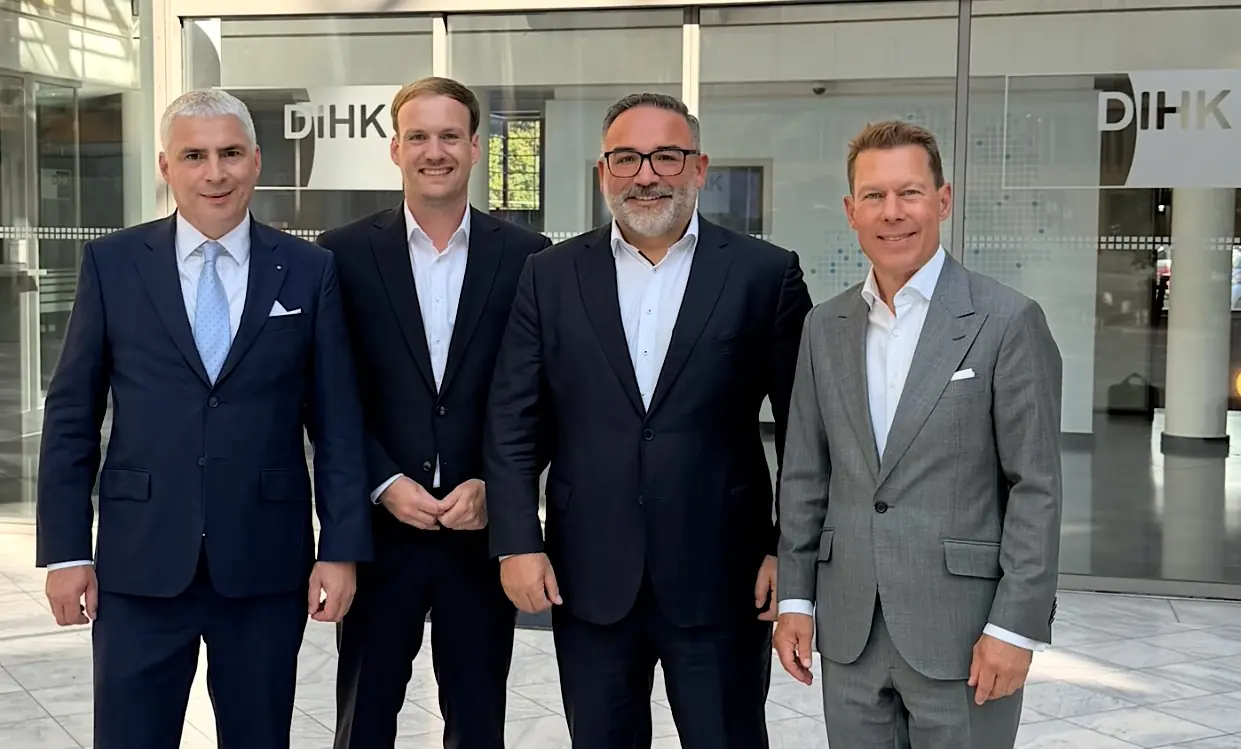
Representatives of the steel trade, the steel industry and politics took advantage of the confidential exchange of expert opinions to draw urgent attention to the growing competitive imbalances caused by the import of steel-based finished products.
The central message was a call for a fair and competitive framework to ensure that industrial value creation, employment and technological expertise remain in Europe.
Unfair competition affects the entire value chain.
During the discussion, it became clear that European companies are under pressure not only from traditional steel imports. Steel-based finished products and components from third countries are increasingly entering the European market with significantly different prices, subsidies, energy and environmental conditions. This creates competitive imbalances that affect both European producers and processors.
Participants and rules of Chatham House
Alexander M. Julius, President of EUROMETAL and Managing Partner of macroMETAL, Dr. Michael Vaasner, Managing Partner of Gebr, participated in the exchange of views. Vaasner, Domenico Marino, Executive Director of Knauf Interfer, Jan Hobert, Head of Metals Procurement and Corporate Procurement at Hettich Management Service, as well as representatives of the Federal Ministry of Economy and Energy. The materials were submitted in accordance with the rules of Chatham House, therefore, this press release does not contain direct quotations and does not attribute individual positions to specific individuals.
A call for the effective inclusion of metal products in trade protection
The participants argued that trade policy should pay more attention to imported steel-based finished products, where market distortions are obvious, European suppliers are being squeezed out due to subsidizing excess capacity or circumvention strategies. The goal is not total protectionism, but to create a rules-based and WTO-compliant system. And a target structure that restores fair competitive conditions.
Among the issues discussed were clearer rules of origin and traceability, the study of "melting and casting" approaches, as well as closer attention to the processing of steel products in existing and future trade policy instruments. Concepts such as European value-added stocks or "Made with Europe" were also mentioned as potential building blocks.
Ensuring the sustainability and independence of Europe
Steel and its products are the backbone of many key industries, from mechanical engineering and crop production to supplies.