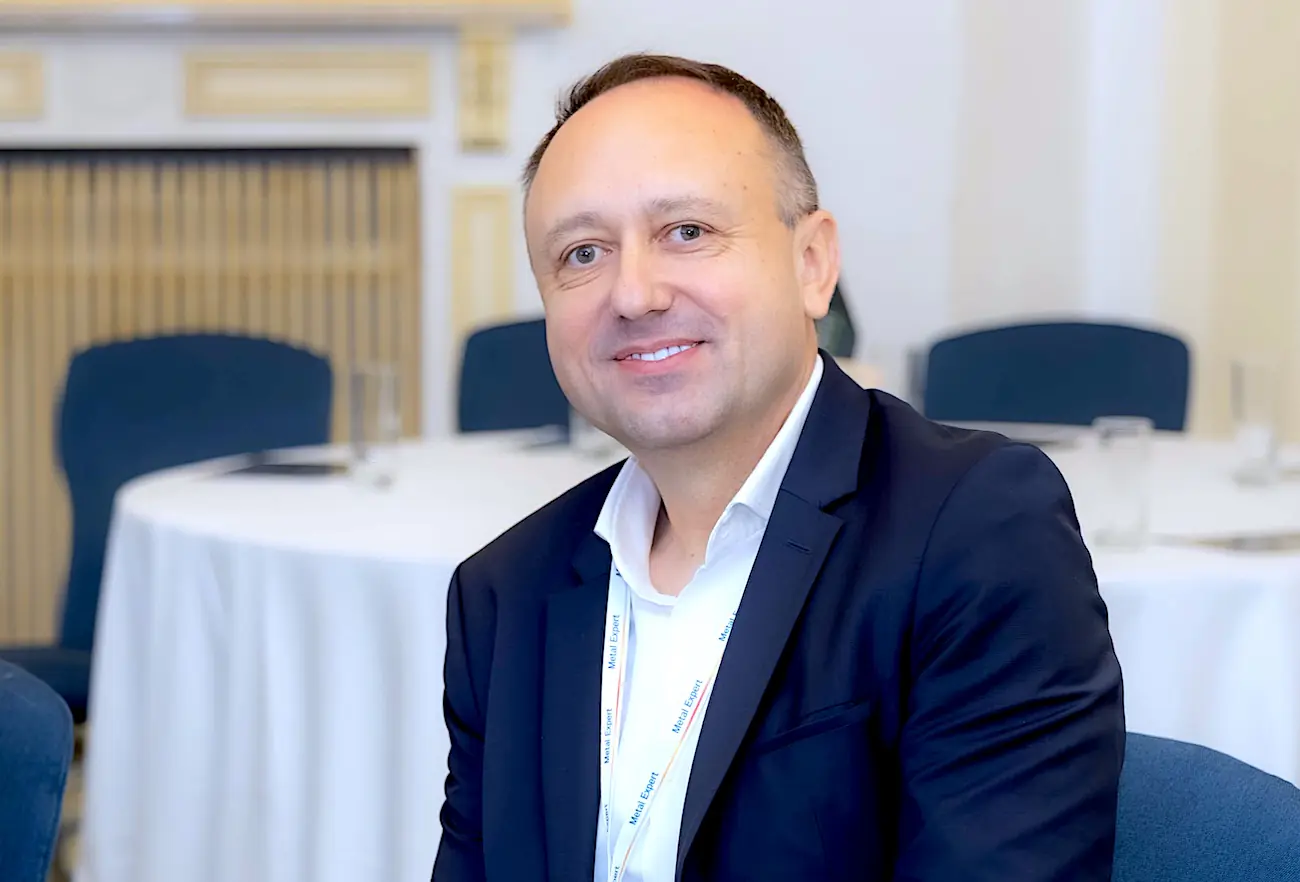
Southeastern Europe is changing its role in the European steel industry: instead of serving as a traditional corridor for moving metal, the region is becoming a hub where value is added through processing, inventory management, logistics and project supply. Eugen Caraulanu, CEO of tk accelis Materials in Romania, Bulgaria and Serbia, gave this assessment in an interview with SteelRadar.
According to Caraulanu, the competitiveness of supply now depends on more than just price and transport costs. Procurement decisions are influenced by the origin of the steel, quota availability, costs associated with the EU’s CBAM mechanism, delivery times, inventory and working capital requirements. Distributors therefore need to do more than sell metal from stock: they must help customers build resilient supply chains.
“A distributor’s value is no longer measured only by the volume of steel it can supply, but also by the reliability of the supply chain built around that volume,” Caraulanu said.
He urged against treating Southeastern Europe as a single market. In Romania and Bulgaria, demand is supported by infrastructure projects, creating opportunities for different steel product groups. Industrial construction is particularly active in Serbia. Overall, Caraulanu described the market not simply as weak, but as selective: prospects depend on the sector, product type and a supplier’s ability to offer more than just the material itself.
In his view, the region benefits from a combination of industrial demand and access to European producers and neighboring suppliers, transport links along the Danube and Black Sea, as well as ties with Turkey and the Western Balkans. Opportunities could expand in the future through Moldova and Ukraine.
Turkey, Caraulanu believes, will remain an important supplier to the region. In 2025, the country produced around 38 million tonnes of crude steel — more than a quarter of the European Union’s apparent steel consumption that year, he said. Turkey also has a strong foothold in Western Balkan markets. Caraulanu cited geographic proximity, a developed and flexible industry, a broad product range and established business ties among its advantages.
At the same time, the EU’s new trade conditions are changing how Turkish supply is assessed. Buyers must take into account quotas, carbon intensity, CBAM costs, product origin, financing, lead times and supply reliability. As a result, Caraulanu forecasts that procurement from Turkey will become more selective, depending on the specific product, producer and available quota. He does not expect Europe to replace Turkish supply entirely; rather, companies will optimize their procurement portfolios as a whole.
Caraulanu is optimistic about 2027. He expects infrastructure investment to continue supporting demand in Romania and Bulgaria, while industrial construction and investment will create opportunities in Serbia and other Western Balkan countries. He sees additional potential in the energy sector. The situation in the Black Sea also affects the region’s prospects, he said: a swift and lasting resolution could bolster confidence, investment and trade.
Caraulanu has worked in the steel industry for 25 years and began his career at thyssenkrupp. He spent more than a decade working in Mill Services at a steel plant in Galați, followed by more than ten years in Materials Distribution. He holds a PhD in finance and an Executive MBA from the University of Washington in Seattle. His operational remit currently covers 11 sites, including warehouses and sales offices, in Romania, Bulgaria, Serbia, Chișinău in Moldova and Odesa in Ukraine. The company also serves markets in the Western Balkans and Greece through exports.
Romania and Bulgaria are members of the European Union, while Serbia, Moldova and Ukraine are not. Caraulanu noted that operating in these countries gives the company experience in managing cross-border supply chains under different regulatory and commercial conditions.


