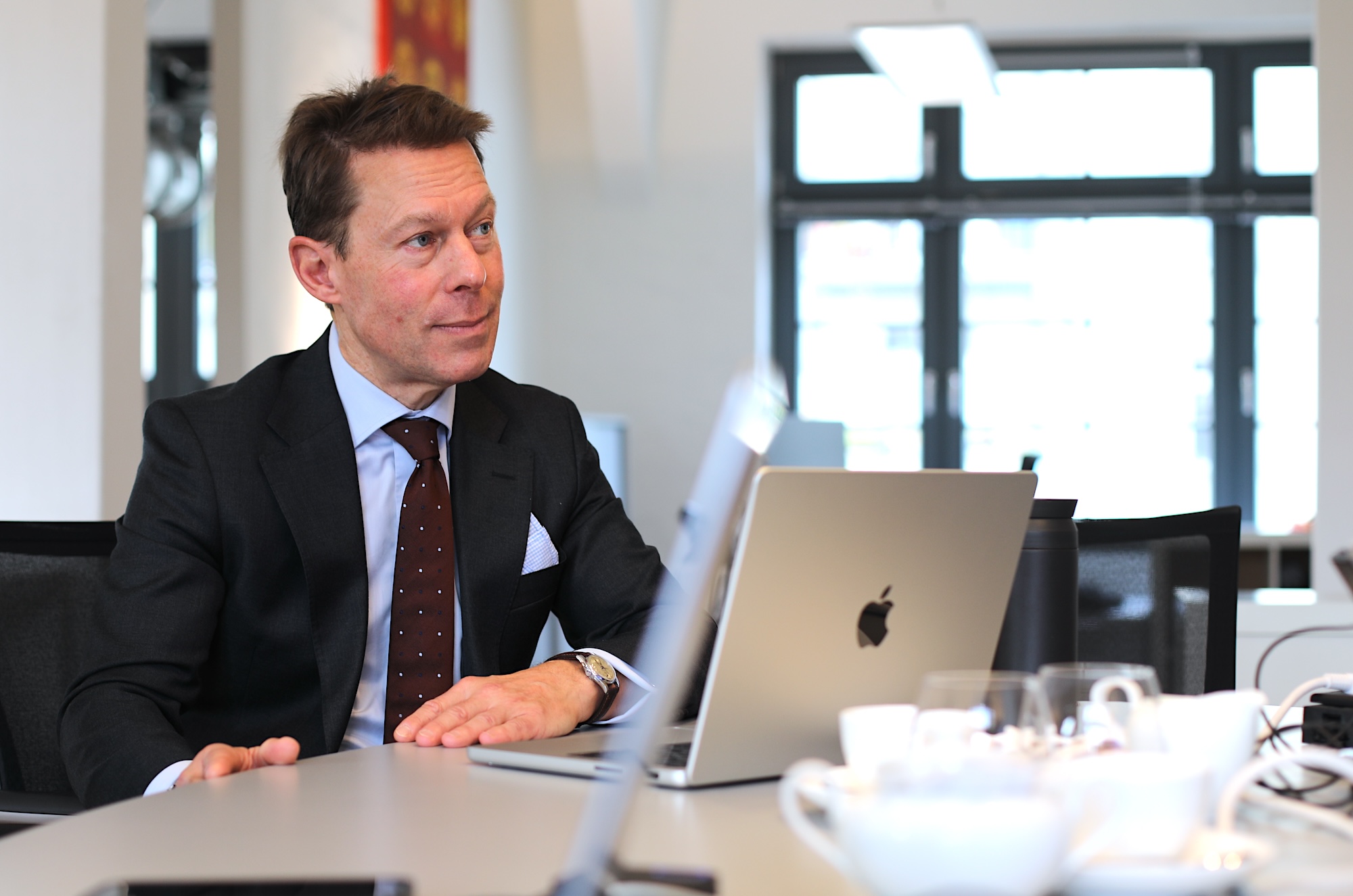
SteelOrbis spoke with EUROMETAL President Alexander Julius about the challenges facing the EU steel industry.
"The European steel industry is ready to become a leader in the field of sustainable development, but it cannot do it alone. We need a coherent policy that protects and empowers all participants in the value chain — from factories to service centers, from traders to end users. Only then will we be able to turn the Green Transition into a European industrial success story," Alexander Julius, President of EUROMETAL
.How would you characterize the current trends in steel demand in the EU steel market in the main sectors (construction, automotive, mechanical engineering, etc.)?
Steel demand in Europe remains weak and uneven across sectors. The construction industry, traditionally the largest consumer of steel, is suffering from high interest rates, declining government investment, and a slowdown in housing and infrastructure projects.
The automotive sector has become more resilient again after a short recovery from the pandemic, reflecting both declining consumer confidence and the difficult transition to electric vehicles. The mechanical engineering industry remains relatively stable due to export activity, but here, too, we see fluctuations in investment.
Overall, we estimate that steel demand in Europe in 2025 is still below pre-pandemic levels, and recovery is unlikely until mid-2026 unless macroeconomic and political conditions improve.
How do high energy prices affect output, investment, and competitiveness?
High and unstable energy costs remain one of the most serious structural challenges for the European steel industry value chain. Despite the fact that prices have decreased compared to the peaks of 2022, Europe still faces a persistent two- to three-fold gap in energy costs compared to Asia and the United States.
Such cost differences discourage new investments, reduce profitability, and reduce competitiveness throughout the supply chain, from primary steel production to distribution and fabrication.
Many consumers are reducing production or moving some processes outside the EU. If a consistent energy and industrial strategy is not adopted, this can lead to long-term deindustrialization and loss of strategic capacities.
Do you foresee further consolidation or restructuring of the European steel industry?
Yes, further