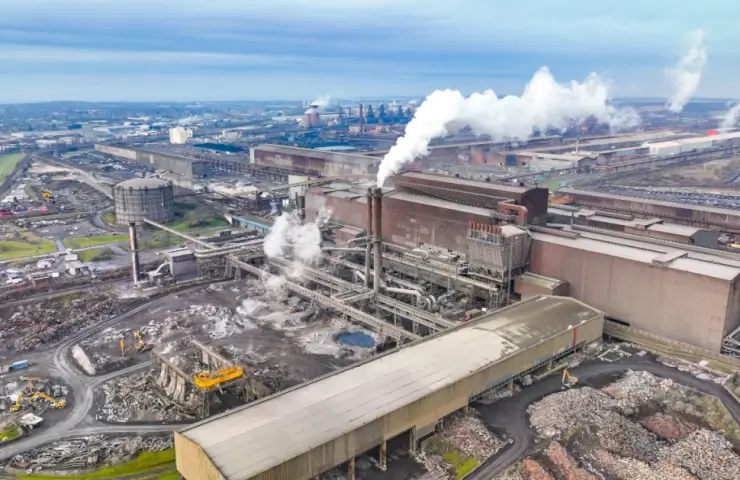
Weak demand continued to put pressure on steel prices in the United Kingdom, as the country's government intervened this month to provide financial support to another struggling steel producer.
Ministers have taken responsibility for the costs of Liberty Steel's special steel division in the UK after the High Court ordered the forced liquidation of steel mills in Stocksbridge and Rotherham, South Yorkshire. The situation has further highlighted the problems faced by the UK steel sector, where Jingye Group-owned British Steel has been under government control since its closure in April.
Sheffield Forgemasters has been under the jurisdiction of the Ministry of Defence since nationalisation in July 2021. Meanwhile, Tata Steel UK is currently dependent on imports to meet the needs of its customers as it continues to shift production based on EDP at a cost of 1.25 billion pounds. This project at the steel company's plant in Port Talbot, South Wales, is partially funded by a government grant of 500 million pounds.
In the course of the latest research conducted by MEPs, rumors have intensified about a possible plan to either sell off the factories now under the control of the British government as a whole or nationalize their activities. However, discussions at the UK Metals Expo in September showed that changes in government policy are needed to ensure the competitiveness of steel producers in the country.
- This article first appeared in the journal MEPS International Review of European Metallurgy. The monthly review features steel prices, indexes, comments, and forecasts for Belgium, France, Germany, Italy, Spain, and the United Kingdom. Contact the members of the European Parliament for detailed information on how to sign up.
Currently, about 70% of the UK's steel needs are met through imports. In the EU, the market share of imports is 27%. Nevertheless, Eurofer is lobbying for tougher trade protection measures from January 1, six months before the expiration of existing protective measures.
The UK's decision should go beyond trade protection measures.
As in the EU, the UK government has held consultations on the form in which the current import protection measures should be replaced, ahead of their expiration at the end of June 2026. The British CBAM system will also be implemented in 2027.
British importers argue that the country's end-users of steel need access to inexpensive materials from third countries in order to remain