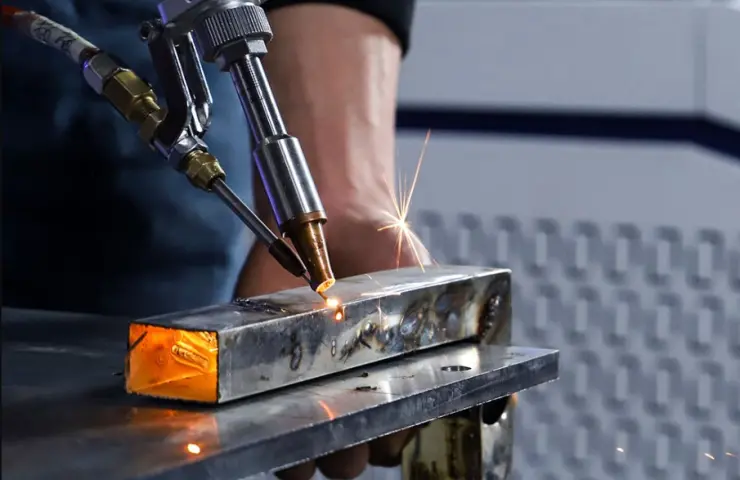
In the manufacture of metal products, it is important not only to ensure the strength of the joint, but also to obtain a neat seam with a minimum number of defects. For such tasks, TIG argon arc welding is used, a technology that allows precise control of the welding joint formation process. It is in demand when working with various metals, manufacturing parts, repairing equipment and performing installation operations.
The principle of operation of TIG welding
The basis of the technology is an electric arc that occurs between the product and a non-melting tungsten electrode. Under the influence of heat, the metal edges melt and form a welding bath. If necessary, the welder additionally supplies filler material to form a joint of the desired shape.
A protective gas, usually argon, plays an important role. It displaces air from the welding area and prevents unwanted interaction of molten metal with oxygen and other environmental components. Thanks to this, you can get a clean and even seam. At the same time, the quality of the result depends on the surface preparation, the selected regime and the skills of the specialist.
TIG argon arc welding is suitable for applications where precision, a neat seam appearance, and controlled heat exposure are important. To choose the right welding equipment, it is necessary to take into account the material of the workpieces, their thickness, the frequency of work and the requirements for the result.
Which metals can be welded
Argon arc technology is used for welding stainless steel, aluminum, copper and some other metals and alloys. The specific possibilities are determined by the characteristics of the material, its thickness, and the requirements for the finished joint. For different metals, the appropriate current parameters, the type of electrode, the filler material and the gas protection conditions are selected.
When working with thin workpieces, heating control is especially important: excessive heat exposure can lead to deformation of the part. If you are going to connect elements of different thicknesses or perform a critical seam, it is advisable to check the welding mode on the samples beforehand.
What equipment is needed for TIG welding
The basis of the working kit is a welding current source designed for the corresponding process. A welding torch, a tungsten electrode, a protective gas supply system and connecting cables are also used. Depending on the task at hand, a gearbox, a gas cylinder, filler rods and additional accessories may be required.
When selecting a kit, it is worth considering which materials are to be processed and how much