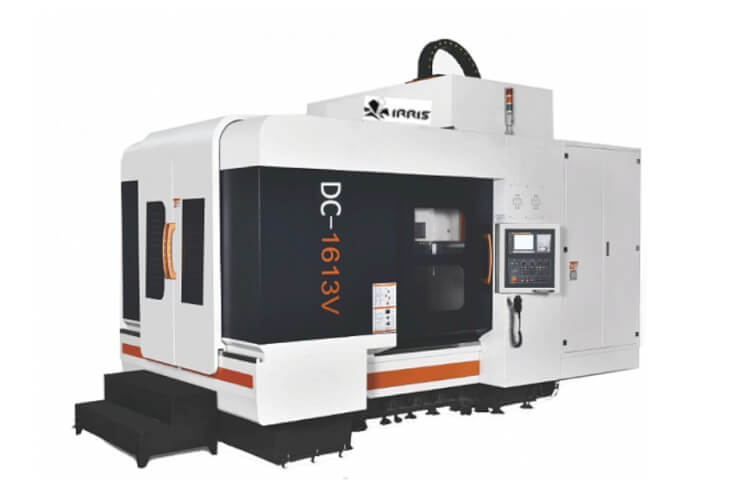
Portal milling machines are the heavy artillery of modern metalworking industry. They are indispensable for processing large overall parts, long products, molds, dies and structural elements where high precision, power and structural stability are required. But one of the most difficult tasks when choosing such equipment is to choose the right dimensions of the work area.
The size of the working field depends not only on the maximum size of the workpiece, but also on the total weight of the machine, its price, the need for workshop space and operating costs. An error at the selection stage can lead either to equipment downtime due to an unsuitable part size, or to overpayment for excess capacity and volume.
Take into account the actual dimensions and geometry of the machined parts
The first and most obvious step is to analyze the details that are planned to be processed. Companies often proceed from the “biggest detail” that may ever come together. This is a safety net approach, but it can lead to overpayments and loss of efficiency.
It is important to analyze not only the maximum dimensions of the workpieces (length, width, height), but also:
- the regularity of their appearance in the production plan;
- the ability to mill a part in parts with reinstallation;
- dimensions when clamped, including fasteners;
- the location of the surfaces to be processed (it is not always necessary to process along the entire length of the workpiece).
Here is an example from the consultants https://www.irlen.ru /: if 90% of tasks fit into 1500×800×600 mm, and a single part requires 2000×1000×800 mm once a year, it makes sense to give priority to a more compact machine and perform the largest operation on third—party equipment.
The relationship between machine size, design, and accuracy
The dimensions of the working area directly affect the mechanical rigidity and precision of the machining. The longer the span (the distance between the gantry posts), the higher the requirements for the machine design: more massive guides, more powerful drive elements, higher frame rigidity.
It is a mistake to think that "the more, the better." Excessive dimensions can lead to a decrease in accuracy if the machine is underweight or the foundation is of poor quality. This is especially critical for high-precision machining: each microswitch along the Y axis over a long span is multiplied by the size of the part.
In addition, the accuracy of height movements (Z axis) is important. If you use a machine with 1,200 mm in Z, but in 90% of cases you process parts with a height of 200-300 mm, the machine will consume