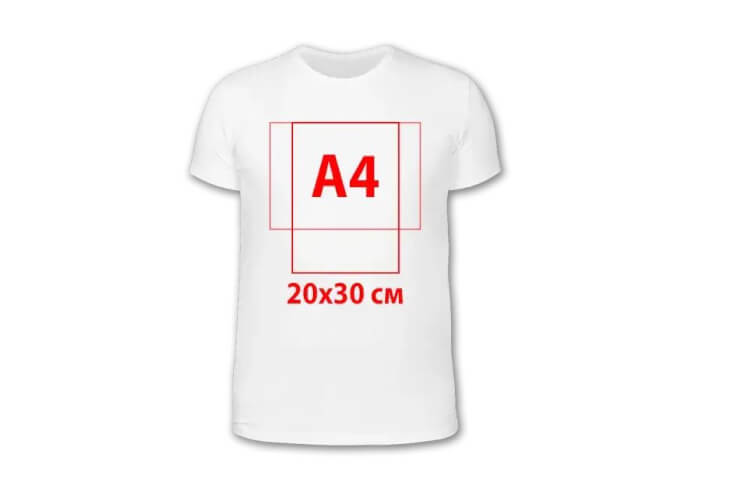
A T-shirt has long ceased to be an exclusively basic wardrobe item. Today, it can reflect a person's interests, serve as a memorable gift, be used as an element of corporate style, or turn into an original item that exists in a single copy. Modern imaging technologies allow you to transfer photographs, drawings, inscriptions, logos and a variety of graphics to textiles, while maintaining the saturation of colors and the necessary image details.
An individual approach is especially interesting when the design is created not for a mass collection, but for a specific person, event or company. PrintShop, a studio specializing in printing on T—shirts and other textiles, helps to prepare such a thing. The ability to use your own image allows you to turn ordinary clothes into a personal item, souvenir, or part of a corporate identity.
Why custom printing has become popular
Ready-made clothes from the store are designed for a wide audience. Even with a large assortment, it can be difficult to find a T-shirt with the perfect inscription, photo or pattern. Individual printing solves this problem: the content of the future print is determined by the customer himself.
You can put an author's illustration, a memorable photo, a humorous phrase, a name, a date, or a graphic symbol on a T-shirt. This approach is especially useful when preparing a gift. Instead of a standard souvenir, it turns out to be an item associated with a certain person or event.
Personalization is also in demand in business. T-shirts with the company's logo can be used by employees, exhibition participants, promoters, event organizers, and sports teams. A single design helps to visually unite the participants and make the corporate identity more visible.
Which images are suitable for printing
The choice of the image depends primarily on the task. For a personal T-shirt, it can be almost any subject: a photograph, a drawing, a collage, or a short inscription. For corporate clothing, they often choose a logo, an organization's name, a slogan, or elements of corporate graphics.
When preparing an image, it is important to consider its quality. A small image downloaded from the Internet in low resolution cannot be infinitely enlarged without loss of detail. When zooming heavily, pixels, blurred edges, and other defects may become noticeable.
If the source file is not high-quality enough, the layout sometimes has to be further processed: remove the background, restore individual elements, adjust the composition, or convert the graphics to a suitable format. Vector graphics are often used for simple labels and geometric elements.