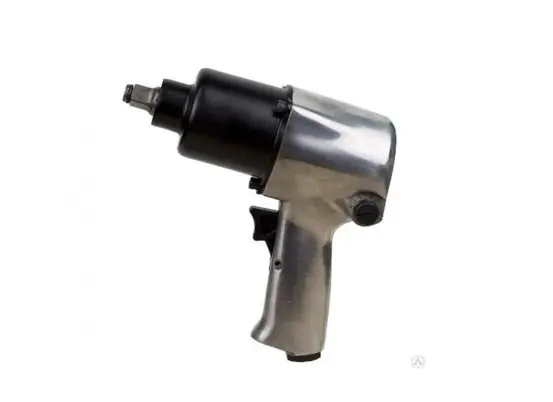
Compressed air tools are widely used in production, car service stations and repair shops. This pneumatic tool is designed to perform various operations and is suitable for regular use in a professional environment. Among the popular devices are pneumatic drills and wrenches, which are used for drilling holes, mounting parts and working with threaded connections.
Pneumatic drills: purpose and features
The pneumatic drill is designed for drilling holes in metal, plastic and other materials, if allowed by the characteristics of the tool and the chosen tooling. It is used in the repair of equipment, assembly of structures, processing of parts and performing various locksmith operations.
The pneumatic drill receives energy from a stream of compressed air, which drives an internal mechanism. Depending on the design, the tool may vary in rotation speed, body shape, cartridge type, and ease of holding. When choosing, it is important to take into account the nature of the work performed, the size of the workpieces and the required drilling accuracy.
What is a pneumatic wrench for?
A pneumatic wrench is used to tighten and unscrew bolts, nuts, and other threaded connections. It is especially in demand in tire repair shops, car service stations, assembly shops and in the maintenance of industrial equipment. Unlike a conventional hand wrench, the device uses compressed air energy, which makes it possible to perform repetitive operations faster.
The pneumatic wrench is selected taking into account the required torque, the size of the fastener and the intensity of operation. When working with critical connections, the requirements of the equipment and fastener manufacturer must be observed. If the exact tightening torque is set, use a suitable tool to control it.
How a pneumatic tool works
A compressed air source, a compressor, is required for the operation of the pneumatic tool. The air flows through a hose to the tool and sets in motion the working mechanism. For the stable operation of the system, sufficient compressor performance, suitable operating pressure and tightness of connections are important.
When organizing a workplace, the length and inner diameter of the hose, the throughput of the connecting elements and the requirements for air treatment are also taken into account. If the parameters of the pneumatic system do not meet the needs of the tool, productivity may decrease and operation may become less stable.
Advantages of pneumatic tools
Pneumatic