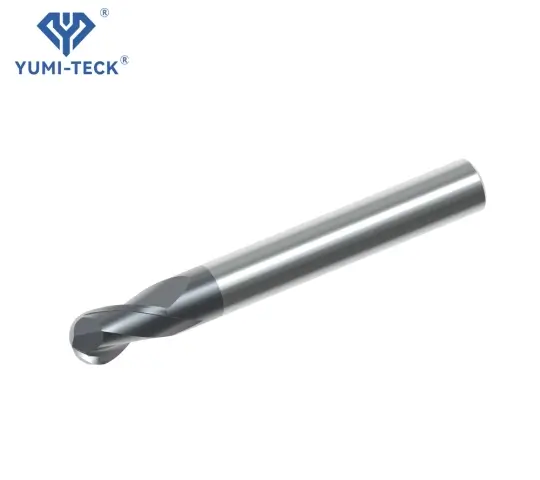
The first order for a cutting tool is usually easy to describe. You need a ball nose end mill for a steel part, the quantity is small, and the job is waiting. The harder conversation comes later: can purchasing order the same configuration again without relying on the programmer who handled the first enquiry?
That is a useful way to approach Yumiteck’s steel ball nose end mill, product 6460485. Rather than buying against a photograph or a broad catalogue category, use the product reference to build a clear purchasing specification. A CNC milling cutters manufacturer can respond more precisely when the enquiry identifies the operation and the information needed for repeat orders.
Make the first enquiry easy to understand
Start with the workpiece material. Give the steel grade and its condition when machining will take place. Include the relevant drawing and explain which feature the ball nose cutter will machine. If the hardness is known, provide it with the material information.
Then describe the equipment constraints that affect tool selection. The available holder, shank capacity and required reach all belong in the enquiry. There is no need to send an entire production manual. A marked drawing and a short explanation are often more useful than several pages of general company information.
Put the supplied configuration in writing
Product 6460485 is presented as a solid carbide ball nose tool for steel. However, the page reference alone should not become the complete purchase specification. The order still needs to identify the actual dimensions and configuration that will arrive.
Request the cutting diameter, ball radius, flute length, overall length and shank diameter. Have the supplier identify the coating and any other features that distinguish the offered variant. If something has not been confirmed, leave it as an open question instead of adding an assumption to the purchase order.
This matters when a photograph is used during a discussion. It can help identify a product family, but it should not replace a dimensioned drawing or written specification. Purchasing and production need to recognise the same tool without interpreting an image.
Read performance language carefully
The product description refers to geometry intended to address vibration and chip movement. Those descriptions explain the design direction; they do not establish how many parts the cutter will produce in a particular setup.
If the supplier quotes a tool-life or productivity improvement, ask which material, operation and cutting conditions the comparison uses. A comparison has little value when one cutter is being judged on finishing work and the other on a different cut.
Keep agreed evaluation criteria with the enquiry record. That makes it easier to understand what was approved and avoids turning an informal comment into an expected performance guarantee.
Compare the cost of completing the operation
Price per cutter matters, particularly when a shop orders frequently. It is still only one part of the decision. Consider the work needed to qualify a replacement, update a tool library, adjust offsets and check the first component after a change.
A lower purchase price does not answer whether the quoted cutter meets the required geometry or documentation. Likewise, a higher price is not proof of better performance. Compare offers against the same written requirements, then assess the practical cost of introducing each option into production.
For a small batch, extensive qualification work may be difficult to justify. For a recurring component, reliable identification and documented approval become more valuable. Explain which situation applies so the purchasing decision reflects how the tool will actually be used.
Settle the commercial details before ordering
Ask about minimum order quantity, sample availability, lead time and packaging before approving the order. These are details to confirm directly, not promises that can be inferred from a product page.
The delivery period also needs a clear starting point. Does it begin at order acceptance, payment or another agreed stage? A quoted number of days is less useful when the buyer and supplier understand the starting date differently.
For repeat supply, establish how the cutter will be identified on its packaging and invoice. Retain that reference in the purchasing system. Clear identification helps prevent a similar but unapproved variant from being issued to a machine.
Leave a reorder record another person can follow
Once a configuration is approved, save the supplier reference,