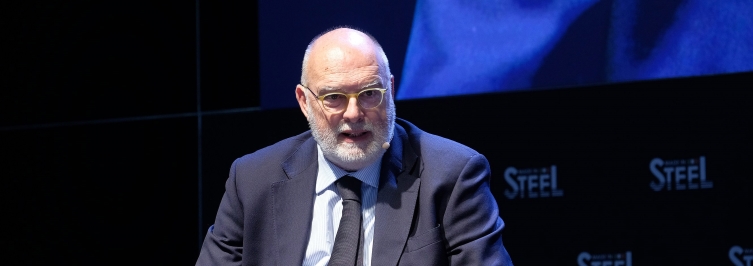
In order to protect European industry from unfair trade and global overcapacity, it is necessary to review the rules of global trade, which will ensure fairness and not "wild" competition, said Antonio Gozzi, president of the Italian steelworkers association Federacciai, at the annual public assembly of the association on Monday, which was watched by Kallanish.
He questioned whether the WTO rules, which are mostly observed by Europeans, remain adequate. Gozzi warned that without a reliable protective trade policy, Europe's industrial base could collapse within a few years. He welcomed the initiative of EU Executive Vice President Stefan Sejourné and Commissioner Maros Sefcovic to review the EU's protective measures on steel, expressing hope that the new rules will be adopted quickly.
Additional support, according to him, should be provided by politics."Buy in Europe," which requires that at least 60% of steel be purchased from European producers in public procurement, and the Carbon Boundary Regulation Mechanism (CBAM), which is designed to protect EU steel from unfair competition.
Increased protectionism in the United States leads to a change in steel trade flows to the detriment of Europe. Gozzi noted that the direct consequences of the imposition of U.
S. duties on Italian steel have long been eliminated. The Trump administration's 25 percent tariffs on European steel, imposed since 2018, have already reduced Italian exports to the United States to less than 1% of national production. With the introduction of new 50% duties, these exports may cease completely.
However, Gozzi's main problem lies in the indirect consequences caused by the redirection of trade. As high tariffs block exports to the United States, manufacturers outside the United States, especially China, are expected to redirect excess production to Europe. He warned that the huge excess of production capacity in China, especially in steel production, creates a growing systemic risk.
Natalia Capra France
Kallanish.com