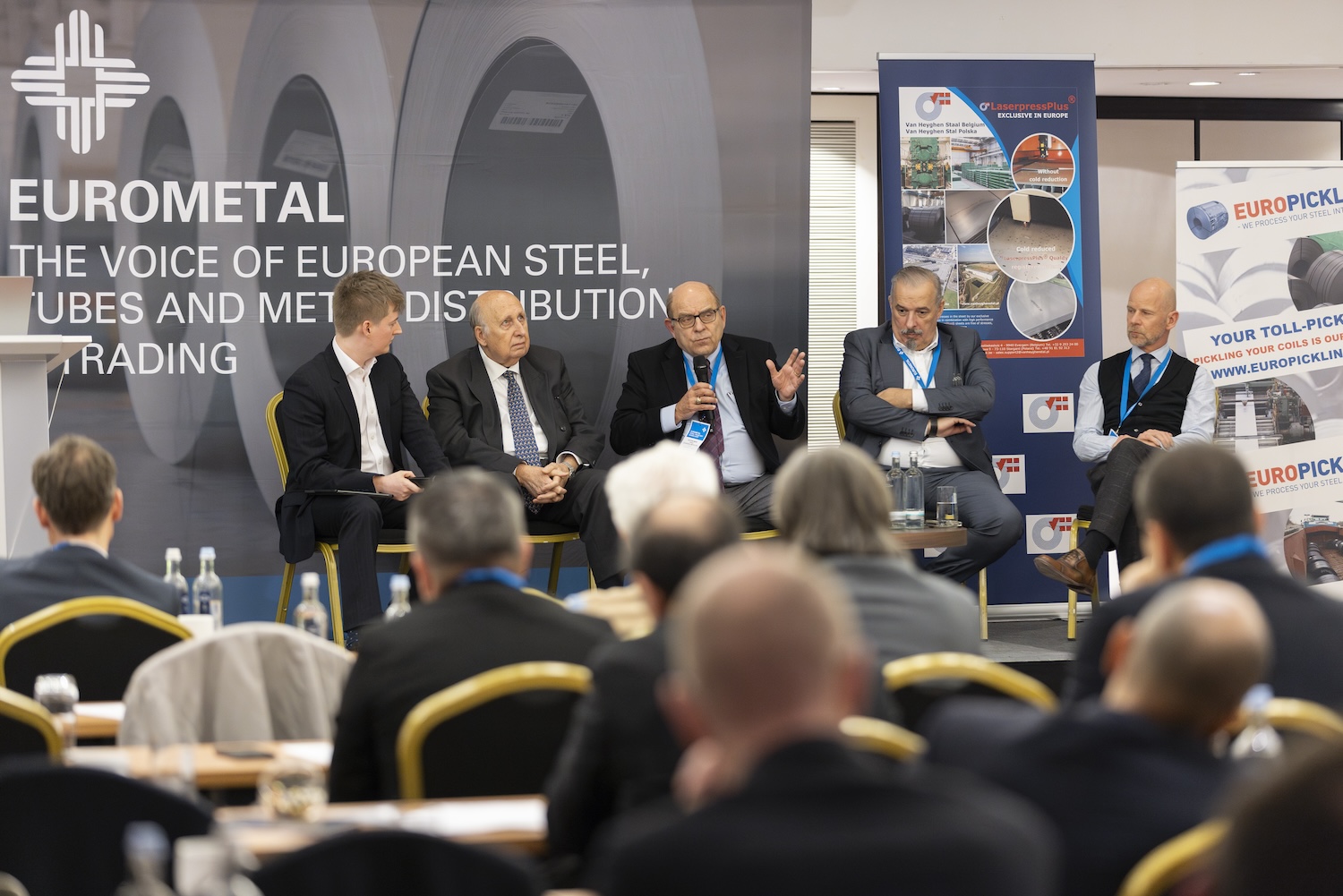
Market participants at the EUROMETAL Steel Trade Day in Dusseldorf warned that the European steel supply chain is entering a period of increased uncertainty, as weak demand coincides with the introduction of a new trade regime and continued uncertainty about the mechanism for regulating carbon boundaries.
From service centers to international traders, the tone at the December 4 event reflected a cautious reassessment of Europe's competitive position, with many noting that the region faces supply cuts, increased volatility, and reduced visibility in 2026.
The new trading system is considered to be structurally more rigid
Most of the discussion at the event focused on the upcoming EU trade protection architecture. A permanent customs control system providing for a 50% duty outside quotas, which is twice the current protective rate. According to many speakers, such a structure can reduce the available import volumes of flat rolled products by more than 40% compared to 2024.
"The numbers are appalling," said one trade policy consultant. "Quotas will be tight, they will be introduced ahead of schedule and will probably be exhausted almost immediately. Small importers will struggle to survive."
Participants noted a number of operational problems, including uncertainty in the allocation of countries, as China, India and Indonesia are unlikely to receive specific quotas at the initial stage, and possible exceptions for Ukraine for security reasons.
Many expect companies to start building up inventories by mid-2026, anticipating higher purchase costs as soon as the new regime takes effect.
The supply chain warns of incalculable risk
At discussion forums and bilateral meetings, participants emphasized that they could not accurately calculate the risks while simultaneously implementing CBAM and TRQ reforms.
"Right now, no one can forecast sales for 2026, not even for the next quarter," said the German distributor. "Financing is difficult, customers want fixed prices, and no one wants to take on the responsibilities of CBAM."
A source from the Turkish mill company said that uncertainty is forcing exporters to overestimate the EU as their main market.
"We are 70% export-oriented and theoretically profitable for CBAM, because we mainly produce electric steelmaking products," the source said. "But we cannot compete with China, which is cheaper by more than $200 per ton. While we don't have clarity, we are focusing more on the USA and North Africa."
Importers also stressed that compliance with CBAM requirements has a negative impact on traffic.