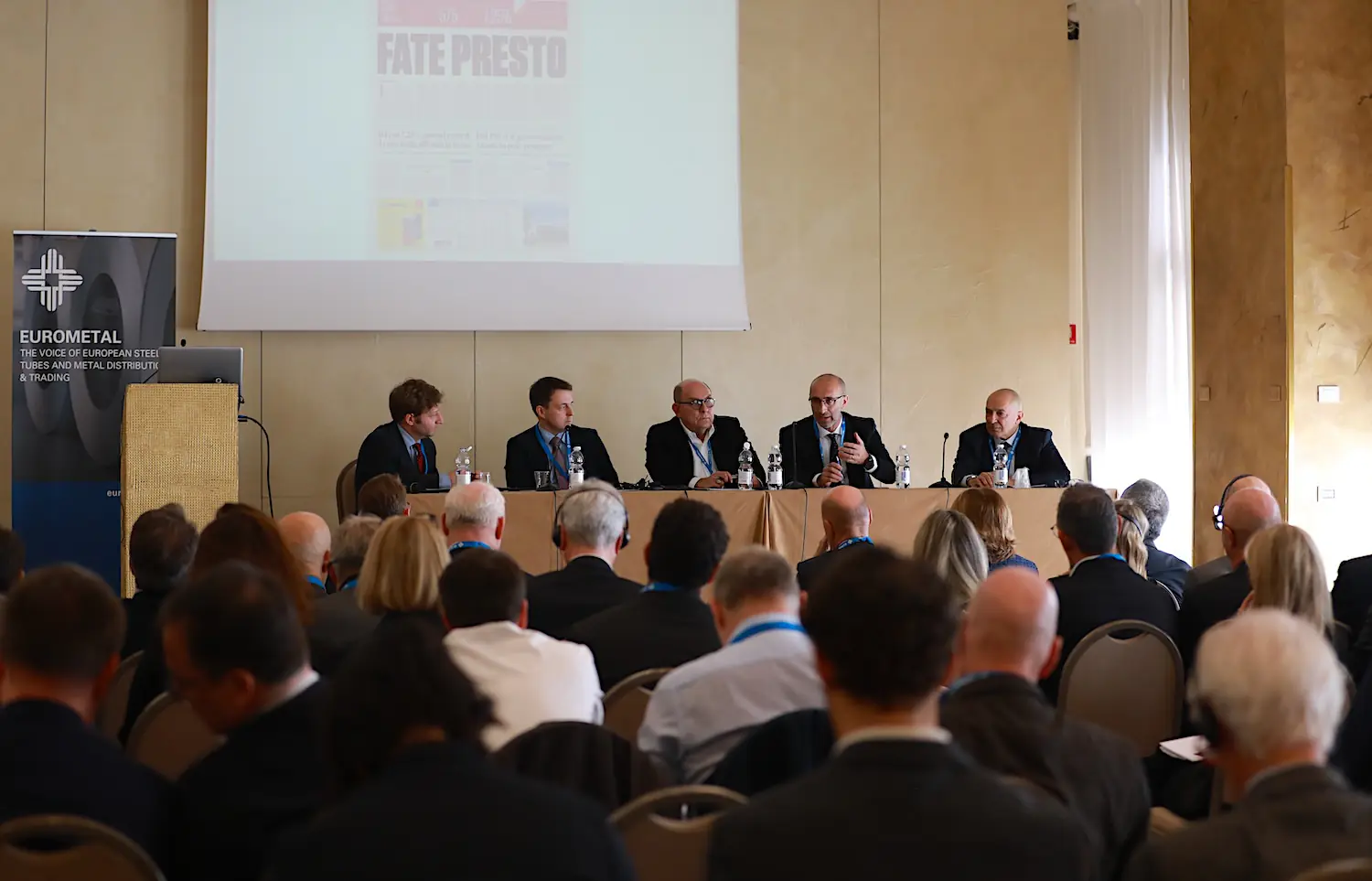
European politicians must act quickly to prevent "industrial desertification," the panelists at the EUROMETAL round table warned, stressing that current protection measures for primary steel are insufficient and calling on the EU to extend precautionary measures to manufacturers of secondary steel and steel derivatives.
At the conference"Are we at risk of industrial desertification in the EU?"At a round table organized by the European Steel Association as part of its event in Milan, Italy, on February 26, speakers also called for a shift from cost-based discussions to demand-driven strategies.
Industry representatives in Central and Southern Europe said that the risk is no longer theoretical, as factory closures and the transition from domestic production to imported models with subsequent assembly are becoming more frequent. Concerns focused on gradual erosion, adding that after the relocation of value chains, they rarely returned.
The EU's carbon border regulation mechanism, originally conceived as an environmental tool to prevent carbon leakage, is now widely seen in the steel sector as an increasingly sophisticated trade protection tool. According to the speakers, although this was aimed at equalizing conditions by setting prices for carbon imports, its heavy administrative burden and uneven product coverage could distort trade flows rather than stabilize them.
Precautions and CBAM
The panelists noted that both the EU's protective measures and CBAM have mixed effects. Despite the fact that the new safeguard regime is aimed at protecting the industry, which reduces quotas, and CBAM, which increases the cost of steel imports, inadvertently open the door to imports of steel derivatives from outside Europe.
Franco Felisa, representative of the Electromechanics Synergy Network, highlighted the serious challenges facing European electromechanical companies. "Every day we lose a significant part of our market," says Felisa, explaining the problem by a significant gap in raw material costs rather than quality. He noted that Chinese raw materials are "at least 50%" cheaper than their European counterparts, which makes it impossible for EU companies to compete with government-subsidized imports.
Piotr Sikorski, president of the Polish Steel Distributors Union, described the trend of deindustrialization as "already noticeable" in Poland and across Europe. "Not a week goes by that I don't get a call informing me that another client has gone bankrupt," Sikorski said, warning that scattered, small