Houston, Oct 24 (Argus) — U.
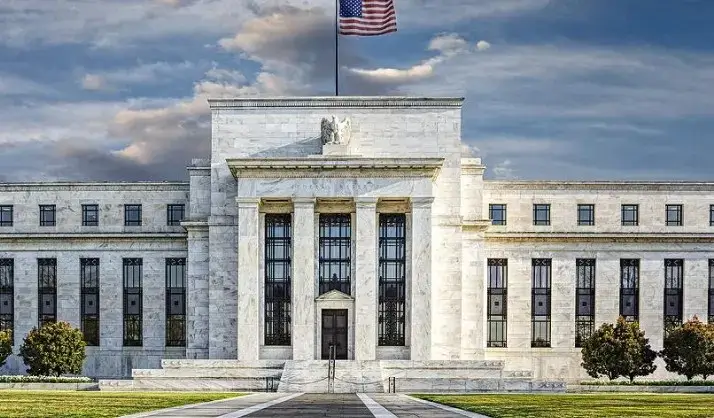
S. consumer inflation rose less than expected in September, setting the stage for an almost inevitable interest rate cut by the Federal Reserve next week to boost the economy amid weak job growth and tariff uncertainty. The consumer price index (CPI) rose 3% year-on-year after rising 2.9% in August, the Bureau of Labor Statistics (BLS) said on Friday. The gain in September was 3.1% lower than the average estimate of economists surveyed by Trading. Economy. Core inflation, which does not take into account the volatility of food and energy prices, rose 3% year-on-year in September, which is also lower than analysts' forecasts of 3.1% growth. The CME's FedWatch tool, following the publication of the inflation report, showed a 96.7% increase in the likelihood that the Federal Reserve will lower its target rate by a quarter point at its next meeting next week. The Fed signaled in two September likely quarter assorted points in the last two meetings of the year, and Fed Chairman Jerome Powell recently highlighted the risks of lower employment growth, the more concerns over inflation, and also citing uncertainty about the effects of President Donald Trump's tariff wars. The BLS agency, whose head Trump fired in August after reports of a sharp decline in employment, published a report during the government shutdown, which banned most government reporting in order to meet social security requirements. "Inflation in September AGAIN exceeded economists' expectations — prices remain stable. The golden age of President Donald Trump has come forever," the White House said in a statement on social media. The energy index rose 2.8% year-on-year in September, accelerating from 0.2% in August. The gasoline price index decreased by 0.5% after falling by 6.6% a month earlier. The food index rose by 3.1% in August. September, down from 3.2% compared to August. The housing construction index grew by 3.6% over the year, unchanged. Services, excluding energy services, considered as the main indicator, increased by 3.5%, down from 3.6% in August. On a monthly basis, the consumer price index rose 0.3% in September after rising 0.4% in August and 0.2% in July. Core prices rose 0.2% in September after rising 0.3% in the previous month.
US President Donald Trump has announced that he has halted all trade negotiations with Canada in protest at political ads that criticized tariffs.
"THUS, ALL TRADE NEGOTIATIONS WITH CANADA ARE TERMINATED," Trump wrote in a post on social media late on October 23.
Trump said the advertisement, in which former President Ronald Reagan speaks negatively about tariffs, was an attempt to interfere with the pending decision of the U.
S. Supreme Court on the legality of tariffs.
Canada was one of the first targets of Trump's tariffs after his return to power. Imports to the United States from Canada are subject to a duty of 35%, with separate duties on imported cars, auto parts, steel and aluminum.
In practice, imports from Canada are taxed at the lowest rates among the leading U.
S. trading partners, as the bulk of trade is exempt from duties under the terms of the free trade agreement between the United States, Mexico and Canada. Trump's tariffs also do not apply to energy.
Earlier this month, the Canadian government said it hoped to reach quick trade agreements on steel, aluminum and energy after a meeting between Trump and Canadian Prime Minister Mark Carney.
The U.
S. Supreme Court has scheduled a hearing for November 5 to review lower court rulings on whether Trump exceeded his authority in imposing emergency tariffs on most U.
S. imports.
Author: Kevin Foster

Финансовая аналитика, прогнозы цен на сталь, железную руду, уголь и другие сырьевые товары.
More news and analytics on
Metallurgprom telegram channel - subscribe to get up-to-date market information and price forecasts faster than others.