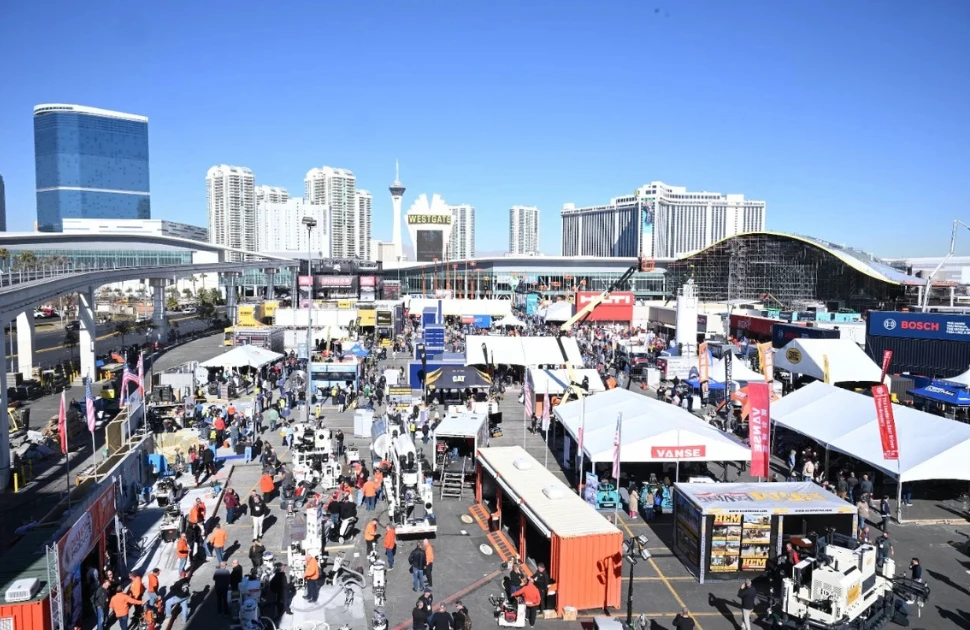
Infrastructure projects are expected to be a key driver of the growth in demand for long products in the United States this year, according to participants at the World of Concrete event in Las Vegas.
Participants of the annual event, held at the Las Vegas Convention Center, told MEPs that they forecast a slight increase in demand for long products in 2026. Demand in infrastructure, data centers, and energy, as well as the ongoing construction of a wall on the U.
S.-Mexico border, were cited as key drivers of demand for rebar, wire rod, beams, and some long products.
Member of the European Parliament, steel market analyst Gary Sanders, who attended the three-day event, said that Trump's policy on import tariffs had also greatly contributed to supporting domestic steel consumption, in particular by "reorienting" production.
Speaking after the event in Nevada, Sanders said: "There has always been foreign investment in the United States, but recently it has become more noticeable. This is a multifaceted issue. The imposition of duties not only on steel, but also on all goods has accelerated the need for foreign companies to move their production facilities closer to the local market."
Steel market participants in the United States who participate in monthly surveys for members of the European Parliament.
According to the International Steel Review, the increase in prices for rolled products recorded in 2025 is largely due to a reduction in supply caused by a reduction in imports due to the imposition of customs duties, rather than an increase in demand. Rebar prices in the United States for MEPs in 2025 were on average 6.6% higher than in the previous 12 months. Average profiles and beams rose in price by 5.1%.
However, the Trump administration promised to provoke a "revival of manufacturing" in the United States after the president returned to office in January last year. East Asian countries, in particular, have agreed to invest billions of dollars in the country in exchange for a reduction in US import tariffs.
Positive attitude towards investments from abroad
Last year, South Korea agreed to invest $350 billion in shipbuilding, energy and semiconductor industries. As part of this commitment, Hyundai Motor Group planned to build a new steel mill in Louisiana, as well as expand its production of cars and spare parts in the United States. Shortly after, Japan signed a similar deal for new direct investments totaling $550 billion, and in recent weeks, Taiwan – mainly through Taiwan Semiconductor Manufacturing Company – has promised to invest heavily in semiconductor manufacturing in the United States, concluding