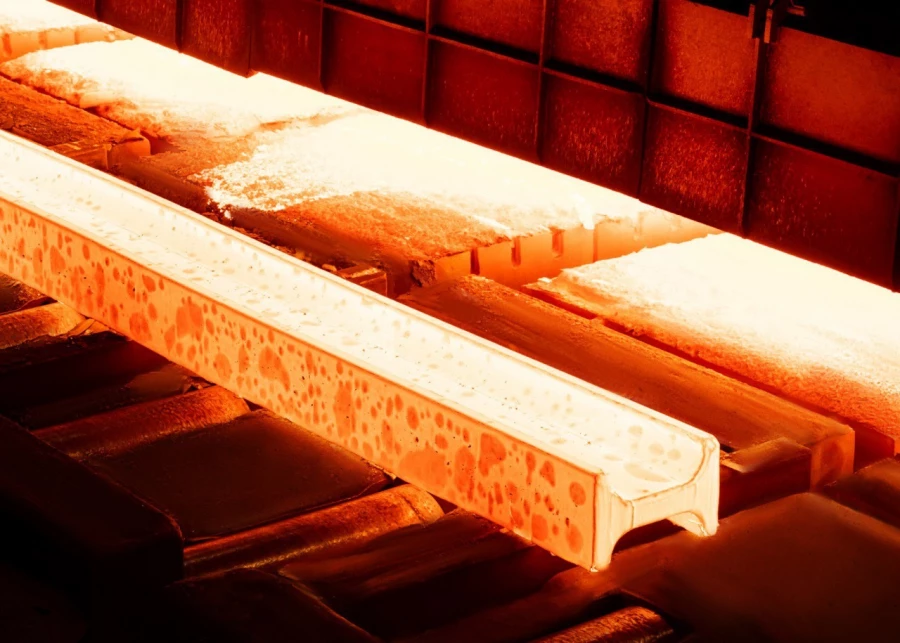
The solution for the wide-beam rolling shop was implemented jointly with CyberPhysics as part of EVRAZ's digital transformation strategy. Investments in the development and implementation amounted to 23.5 million rubles, the economic effect is estimated at 300 million rubles per year.
Photo: EVRAZ.
The wide range of products, equipment maintenance time, and lack of automated temperature control led to increased consumption of natural gas. The project makes it possible to switch from manual control of heating modes for more than 40 steel grades and 80 types of rolled products to intelligent algorithms.
CyberPhysics specialists have created and validated a hybrid mathematical model, a digital twin of the heating process. It combines the fundamental physical laws of heat transfer and neural network algorithms trained on tens of thousands of historical records of technological parameters.
The digital twin analyzes a variety of parameters in real time: the grade of steel and the cross section of the workpiece, the schedule of mill downtime, current and planned indicators. Based on these data, the system calculates optimal temperature values for all furnace zones at each heating stage. The system is integrated into the workshop's work processes: metal heaters receive clear tips on setting temperatures, the step of laying out workpieces and the forecast of output. The interface is designed taking into account the needs and working conditions of the CPSHB heaters with their direct participation.
In addition to direct fuel economy, the system helps to reduce scale formation and minimize metal overheating, which has a positive effect on the quality of rolled products and equipment life. EVRAZ NTMK is considering the possibility of replicating the solution to other production sites, primarily the ball rolling mill.