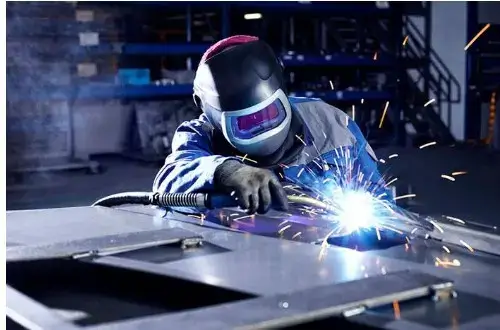
Craftsmen in short supply: how to make money at a home welding workshop
Robots and algorithms are taking over jobs at an incredible rate. Machines process documents instead of accountants, vending machines serve customers instead of cashiers, and software advises customers instead of managers. The fear of losing their jobs covers millions of people.
But there are areas where technology is powerless. The algorithm will not fix a neighbor's leaning fence, cook a barbecue for a cottage, or make a rack to fit your garage. The digital world cannot replace real hands that create real things.
The paradox of time: the more automation there is, the greater the shortage of manual labor. Experienced welders have either been mobilized or left the country. The remaining craftsmen are inundated with orders and set cosmic prices.
Try to find a specialist for basic work. Weld a crack in the gate, install a metal ladder, and repair the balcony railing. The search takes weeks, and the cost of the work makes you think about mastering the craft yourself.
Garage workshop as a business idea
The gold mine lies right under the nose. While the crowds are storming programming courses, the real money is waiting for those who are ready to pick up a tool. Modern welding equipment has turned a complex craft into an affordable hobby.
No production facilities or huge investments are needed. A free corner in the garage, shed or even on the balcony will be the starting point. The main thing is the desire to learn and high—quality equipment.
Choosing a welding machine
There are two main technologies for home use — manual arc welding and semi-automatic.
Inverter devices are a universal solution
The welding inverter converts alternating current from an outlet into direct welding current. It works with coated electrodes that melt and form a seam. The technology is as simple as an axe — you light an arc between the electrode and the metal, you lead it along the connection line.
The advantages are obvious: compactness, operation from a household network, the ability to weld any thickness of metal. Consumables are cheap and affordable. There is only one drawback — it requires the skill of maintaining a stable arc.
Semi—automatic systems - professional level
The semi-automatic machine uses a thin wire that is automatically fed into the welding area. The process takes place in a cloud of protective gas, which ensures the purity and strength of the joint.
The result is superior to manual welding — neat scaly seams, minimal splashes, and the ability to work with thin-sheet material. The work speed is higher, the fatigue is less.
But the system is more complicated — you need