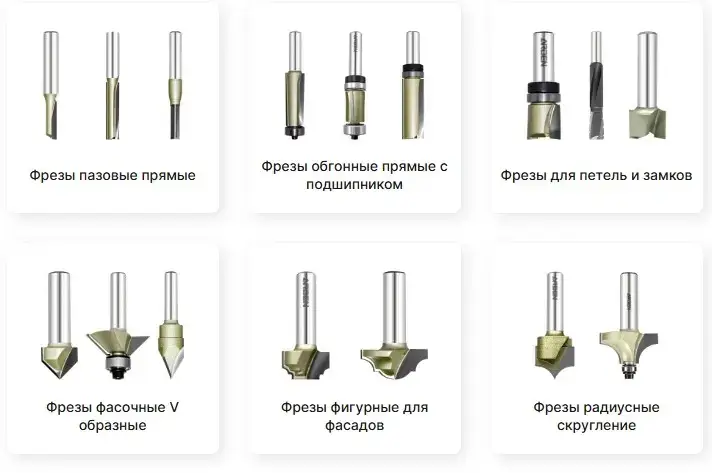
The technology of machine milling is widely used for processing workpieces and producing end products. The procedure is performed using a special cutting tool – a milling cutter. Modern classical end mills for CNC machines allow not only to remove a layer from the surface of the material, but also to cut internal and external grooves, ledges or grooves. Such a product consists of two main parts:
- The cutting one is equipped with grooves for removing the material to be cut and is equipped with sharp edges located at a certain angle.
- Shank – has standard dimensions for fixing in the machine chuck. A generally accepted standard classification is used for this type of instrument.
Production is carried out using hard alloys, high-speed grades of metals and ceramics. The accuracy of the cutting and the quality of the manufactured products depend on the technical characteristics of the milling cutter.
The main types and classification of the instrument
The standard milling tool is the cutters, which are fixed in the chuck and rotate around its axis. They are used to remove (cut) the material from the workpiece to the specified dimensional parameters and geometric shapes. Classification of end mills by shape and design:
- Spherical — the cutting part is made in the shape of a hemisphere. It is used for processing and manufacturing parts with complex (curved) geometry.
- Keyways — they have two cutting teeth on the end. This allows the milling cutter to be deepened into the material along the axis of rotation and moved longitudinally. It has been used to make keyways of various widths and depths.
- Radius — the cutting edges are rounded. They have found applications for rounding and processing inclined surfaces.
- Conical — the cutting part has the shape of a pointed or truncated cone. They are necessary when creating conical blind or through holes, for processing corner grooves and chamfering.
On the website olmitool.ru Innovative products for multifunctional CNC machines are presented. These are structures with a changing geometry of the cutting part, a combination of sharpness and angle of inclination of the cutting edge, special screw (spiral) grooves to reduce the negative effects of vibration, sharpening in the body of the milling cutter itself, which are necessary to prevent the formation of "biting" and re–processing of chips.