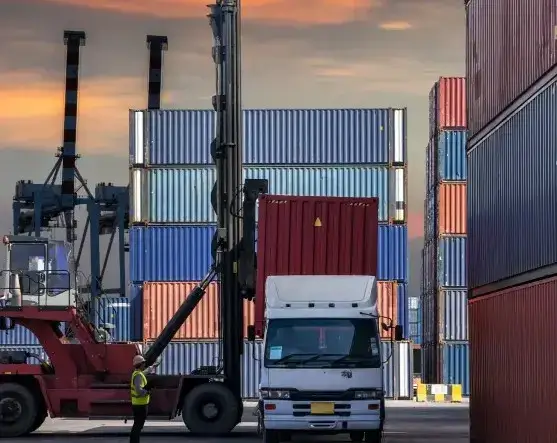
International logistics requires careful planning. When purchasing goods abroad, it is necessary not only to choose a supplier, but also to arrange transportation, prepare documents, determine the appropriate route and take into account the requirements of customs clearance. Errors at any stage can affect the delivery time and the total cost of the product.
The competent organization of transportation is especially relevant for companies that regularly work with foreign suppliers. Modern logistics services help to combine several stages into a single scheme: from picking up cargo from the sender to delivery to the recipient.
Choosing the transportation method
The optimal route depends on the country of departure, the characteristics of the goods and the time requirements. For international shipments, road, sea, and multimodal transportation can be used. In some cases, it is advantageous to combine several modes of transport.
- Car delivery is suitable for flexible route planning and transportation between many regions.
- Sea container transportation is used for the transportation of large quantities of goods.
- Combined shipments allow you to combine small shipments from several customers into one shipment.
Why is cargo consolidation important?
Not every company needs to order a separate transport for a small batch of goods. Consolidation allows you to combine several shipments and make more efficient use of cargo space. Before shipment, the goods arrive at the warehouse, where they are accepted, checked and prepared for further transportation.
When choosing a logistics scheme, it is important to clarify in advance the rules for receiving goods, packaging requirements and the list of necessary documents. Additional conditions of transportation and clearance may apply for different product categories.
Documents and customs clearance
Foreign economic supply is associated with the preparation of documents confirming the origin, value and characteristics of the goods. Depending on the specific transaction, a contract, an invoice, a packing list, and other documents may be required.
Before starting transportation, it is useful to check the classification of the goods and the applicable import requirements. This approach helps to estimate possible costs in advance and reduce the likelihood of delays during customs procedures.
How to make deliveries more predictable
Reliable international delivery is based on planning and information exchange between all participants in the process. To control the delivery, it is advisable to coordinate the route and transfer conditions in advance.