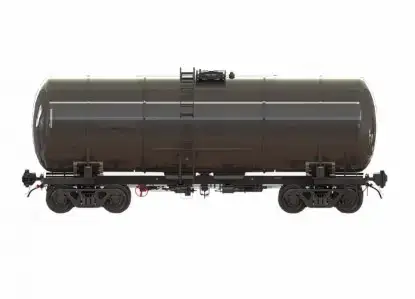
In modern conditions of fierce competition and specific logistical requirements, universal solutions are giving way to specialized ones. Custom production of freight wagons is becoming a strategic choice for companies seeking to optimize their transportation costs and increase the efficiency of logistics chains. An individual approach to the creation of rolling stock allows us to take into account the unique characteristics of goods and the specifics of technological processes, which ultimately gives the company a decisive advantage in the market.
Why don't standard solutions always work?
Rail transport has traditionally been renowned for its versatility, carrying capacity and economic efficiency, especially when transporting large shipments over long distances. However, standard models of freight wagons may not be able to cope with a number of specific tasks.
For example, the transportation of particularly fragile goods requiring special vibration damping conditions, or bulk materials with specific physico-chemical properties (prone to caking, clumping, or requiring protection from the environment) is often ineffective in a standard gondola or hopper. The same applies to oversized heavy loads, which require platforms with reinforced construction and unique fastening systems. It is in such cases that custom production comes to the fore, which makes it possible to create rolling stock ideally suited to the task at hand.
Key features of custom wagon production
The process of creating an individual freight car is a complex, multi—stage project that requires close cooperation between the customer and the manufacturer.
-
Deep pre-project research. Engineers and technologists, together with the client, analyze all the characteristics of the cargo: from dimensions and weight to physico-chemical properties and transportation conditions. This allows us to formulate the terms of reference, which will become the basis for the future design.
-
Development and approval of design documentation. At this stage, a virtual prototype of the wagon is being created, and all components and systems are being worked out. Modern manufacturers are actively using digitalization technologies, introducing telemetry sensors into the design to monitor cargo status and movement parameters in real time.
-
Selection of materials and components. Depending on the purpose of the wagon, materials with the required properties are selected: high-strength steel to reduce tare and increase load capacity, stainless steel for tanks for chemically active substances or aluminum alloys to facilitate