Modern industrial enterprises use complex engineering systems where individual units work as a single organism. To ensure effective interaction between pumps, filters, reservoirs, heat exchangers and other elements, technological equipment strapping is used, which unites them into a single working network. This is not just the installation of pipelines, but a complex of engineering solutions that directly affect the safety and stability of production.
The function of strapping is to connect the equipment and create a closed circuit of the technological media. If communications are not properly designed, the equipment will not be able to work synchronously and reliably. It is important to take into account the operating parameters — pressure, temperature, characteristics of a liquid or gas, as well as sanitary standards when it comes to pharmaceuticals or the food industry. Even small deviations at the installation stage can lead to disruptions in the technological process.
The key point in system design is the choice of materials. Stainless steel remains the most sought-after solution in critical industries. It is resistant to corrosion, does not react chemically with working media and retains a perfectly smooth inner surface, which is especially important for sanitary industries. In this context, the cost of installing stainless steel pipes is determined not only by the price of the material, but also by the installation technology, including welding and sealing operations, as well as the complexity of tracing.
Work on the system begins with the design. Engineers determine the optimal scheme for laying pipelines, the connection points of the units, as well as the locations of shut-off valves and instrumentation. The goal is to minimize the number of joints, eliminate unnecessary bends, and simplify further maintenance as much as possible. At the same time, access to key nodes is taken into account — this is especially important for enterprises with round-the-clock production, where any delay can result in significant losses.
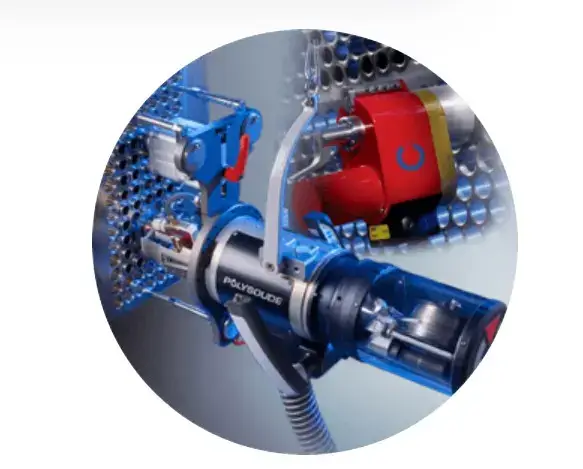
The next stage is installation. During the work, strapping of technological equipment includes the installation of pipes, valves, filters, sensors, pumping units and various auxiliary elements. All connections must be airtight and resistant to vibrations and the working environment. If necessary, orbital welding and special fittings are used to ensure the sterility of the contours and the accuracy of the joining. Each node is assembled according to a pre-approved