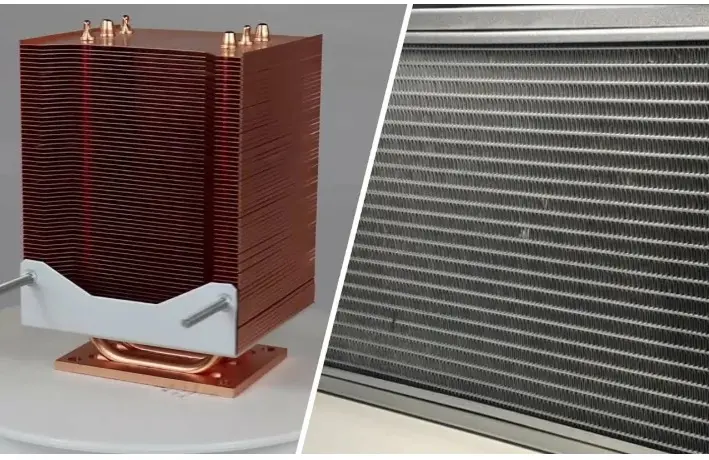
Industrial radiators play a key role in equipment cooling systems where high load and prolonged operation are the norm. Such radiators are used for diesel generators, compressors, pumping stations, large industrial engines and other installations where overheating can lead to reduced productivity or breakdown. Reliable cooling allows you to extend the service life of the equipment, reduce repair costs and ensure stable operation in all conditions.
The main function of an industrial radiator is to remove excess heat and maintain an optimal temperature. Unlike automotive or construction radiators, industrial devices operate continuously under high load conditions and are often exposed to aggressive environments, vibrations, and temperature fluctuations.
Types of industrial radiators
Industrial radiators vary in design and material, which allows them to be adapted to specific tasks.:
-
Aluminum radiators are lightweight and efficient, often used in generator sets and compressors.
-
Copper radiators — provide maximum heat transfer and are resistant to aggressive environments, suitable for heavy industrial installations.
-
Composite and combined radiators — combine metal and plastic elements for weight reduction, vibration resistance and durability.
The choice of radiator type depends on engine power, operating time, environment, and reliability requirements.
Application of industrial radiators
Industrial radiators are in demand in various fields:
-
Radiators of diesel power plants provide reliable cooling of generators and stable operation of power supply in factories, construction sites and in emergency situations.
-
Radiators of compressors and pumping units — maintain the optimal temperature of working fluids, preventing overheating and equipment breakdown.
-
Radiators for thermal power plants and boiler rooms effectively cool auxiliary units and engines, ensuring stable operation of the entire system.
-
Radiators of industrial engines and machinery — excavators, loaders, conveyor lines and other heavy machinery operate under high load, and the radiator ensures reliable cooling and durability of the equipment.
In each case, the radiator ensures stable engine operation, prevents overheating and wear, and minimizes the risk of downtime and breakdowns.