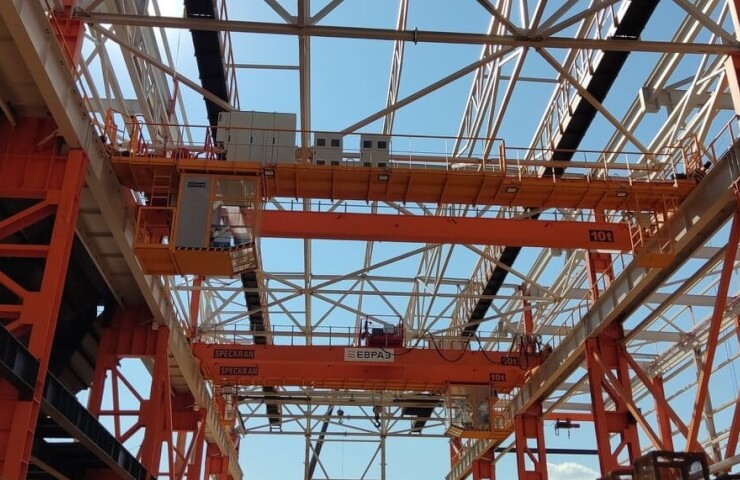
Overhead cranes are an important part of the equipment of production halls, warehouses, repair facilities and other facilities where heavy loads need to be moved regularly. The choice of such equipment cannot be reduced only to determining the maximum mass of the lifted product. It is necessary to take into account the size of the work area, the construction of the building, the intensity of operation and many other parameters. Therefore, the calculation of a bridge crane begins with the collection of initial data and the preparation of a full-fledged technical specification.
Load capacity is an important, but not the only parameter.
First of all, the maximum mass of the transported cargo is determined. At the same time, removable lifting equipment must be taken into account — for example, slings, traverses or special grips, if their weight, according to the documentation, should be included in the design load. The regularity of handling loads close to the rated lifting capacity of the crane is also important.: it affects the operating mode and the design requirements of the equipment.
Exceeding the specified rated load capacity is unacceptable. Therefore, the parameters of the equipment must correspond not only to current operations, but also to the actual conditions of the production process.
How to determine the span and height of the lift
The span of a bridge crane is the distance between the axes of crane tracks. It is a mistake to assume that this parameter is equal to the width of the workshop. The actual span is affected by the location of columns, crane beams, processing equipment, passageways, and other building elements.
If crane tracks already exist, for the design it is necessary to determine the distance between the axes of the rails, their type, elevation and technical condition.
When determining the height of the lift, not only the distance from the floor to the required top point is taken into account. It is necessary to take into account the height of the load, the length of the slings or traverse, the required safe clearance and the construction height of the crane itself. Otherwise, a situation may arise when the equipment is suitable for carrying capacity, but does not allow lifting the load to the required level.
Single girder or double girder crane
The next step is choosing a design. Single-girder models are widely used for standard production and warehouse operations under moderate loads. They are characterized by a relatively simple design and make it possible to efficiently solve many typical tasks.
The double-girder scheme is used for significant lifting capacity, large spans and intensive operation. It is also relevant if you need a full-fledged cargo truck, special lifting equipment or additional mechanisms.