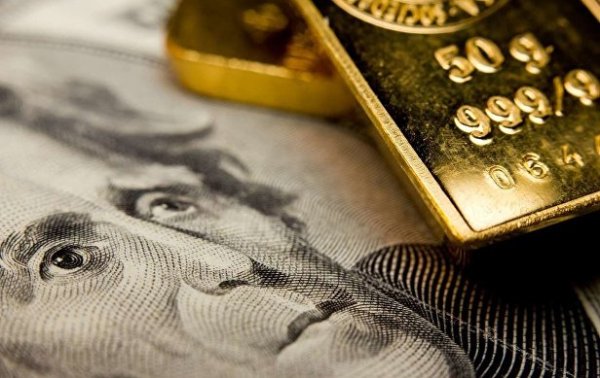
In July-September, the gold price continued its bullish trend, updating historical highs. Demand for both physical and virtual gold is growing ahead of forecasts despite prices, and the escalation of geopolitical tensions does not give a chance to move to risky assets, and there are no prerequisites for lower prices yet, according to analysts interviewed by the Bulletin of the Gold Industry.
In the reporting quarter, the price of gold futures on Comex in New York increased by more than 16% to almost $ 3,900 per ounce, while on October 1 the price recorded a record $ 3,922 per ounce. At the same time, the spot price closed at $3,886.
Elena Kozhukhova, an analyst at IC VELES Capital, told: "Gold prices continued to update historical peaks at the end of September and came close to $ 3,900 due to the risks of a shutdown in the United States, which, if continued, could push prices to $4,000 per ounce." Other reasons for further price increases, she said, could be geopolitical and economic instability in different parts of the world.
The shutdown — the shutdown of some US government agencies funded directly by Congress, due to the lack of an agreed budget for the next fiscal year, nevertheless occurred again under Trump.
Finam analyst Nikolay Dudchenko called the shutdown only one of the short-term factors affecting gold. The key reasons for the growth, in his opinion, still remain the trajectory of the Fed's rate and the independence of the American regulator amid pressure from US President Donald Trump, who announced the possible dismissal of Fed Chairman Jerome Powell before his term expires in May 2026, despite the lack of such legal authority. Trump has repeatedly called on Powell to cut Fed rates more aggressively.
"Prices also support the inflow of funds into ETFs and continued interest from global central banks. Again, the geopolitical factor is that the conflict in the Middle East is far from over, and tensions are currently escalating around Venezuela," Dudchenko says.
Oksana Lukicheva, precious metals market analyst at Uralsib Bank, adds that at the end of July, according to official statistics, central banks bought about 430 tons of precious metals, the estimate for the year is 900-1000 tons. It's worth considering that we don't see all bank purchases.
"Demand is high, injections into exchange-traded funds reached 473 tons at the end of September since the beginning of the year, and apparently this is not the limit, although previously this flow was estimated at 500 tons for the whole of 2025. That is, purchases are clearly ahead of schedule," Lukicheva stressed.
The World Gold Council (WGC) shows that over the past three years (2022-2024)