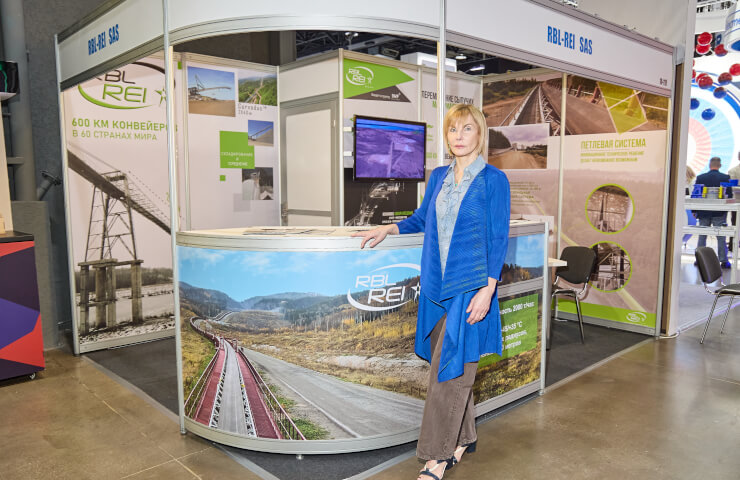
Long curved conveyor belts, capable of skirting obstacles without intermediate overloading of raw materials, are a competitive alternative to road and rail transportation. At the 31st Central Asian International Exhibition Mining and Metals Central Asia (MMCA) in Almaty, the capabilities of such systems for enterprises in Kazakhstan were presented by the French company RBL-REI.
For enterprises moving large volumes of bulk materials in bulk, even a small reduction in the cost of transporting each ton can have a tangible economic effect. RBL-REI associates the prospects of its solutions in Kazakhstan with the task of reducing the cost of production by reducing transportation costs.
"The conveyor is the most environmentally friendly and energy—saving mode of transport: it is powered by electricity and requires minimal human intervention. Our company is engaged in the design, production and launch of ultra-long curved belt conveyors without reloading units. Such equipment can replace vehicles and significantly reduce logistics costs. The unit is suitable for the delivery of raw materials to a processing plant, finished products to a railway station or a port," said Marianna Dgebuadze, Head of RBL—REI's representative office in the CIS.
According to the company, the transportation component in the transportation of bulk materials can reach 20-30% of the cost of production. Conveyor transport reduces these costs, especially when using systems without reloading units. Each such node requires additional equipment and maintenance, and a drop in material during overload leads to premature wear of the tape. The curved track allows you to bypass agricultural lands, forest areas, settlements and reservoirs, while maintaining the continuity of the tape on turns.
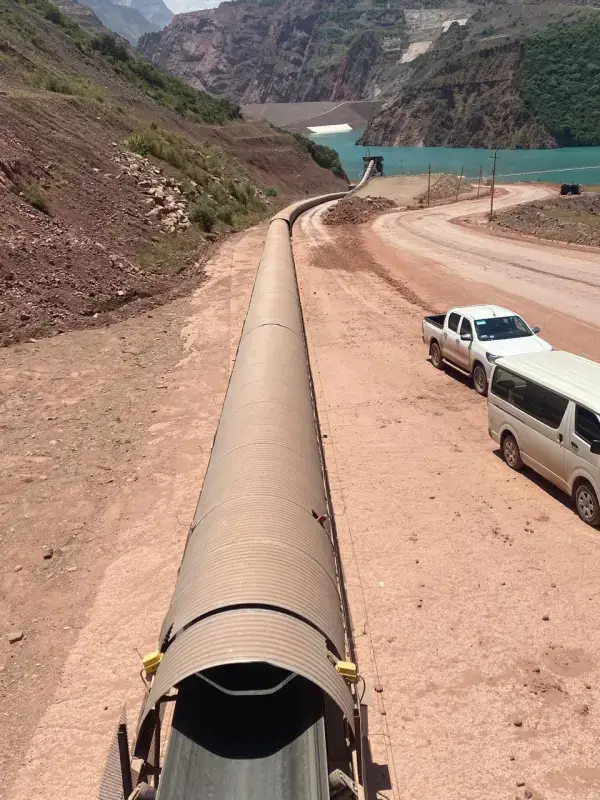
An example of the implementation of such a solution in Central Asia is the conveyor in the city of Rogun in Tajikistan. Its length is 4,020 m and its capacity is 5,500 t/h. The route includes four horizontal turns and a suspension bridge with a span of 100 m. The conveyor is used to transport boulders during the construction of the Rogun hydroelectric dam, which is projected to become the tallest in the world.
When choosing a technical solution, RBL-REI specialists perform calculations and propose options for optimizing the route, taking into account the climate, terrain and future operating costs.
"The economic effect for industrial enterprises depends not only on the purchase price, but also on the cost of ownership, which, in turn, is related to the reliability and service life of the equipment. The life cycle of our conveyors is 25-40 years, and the coefficient of technical readiness (KTG) reaches 96%," added Marianna Dgebuadze, which is why