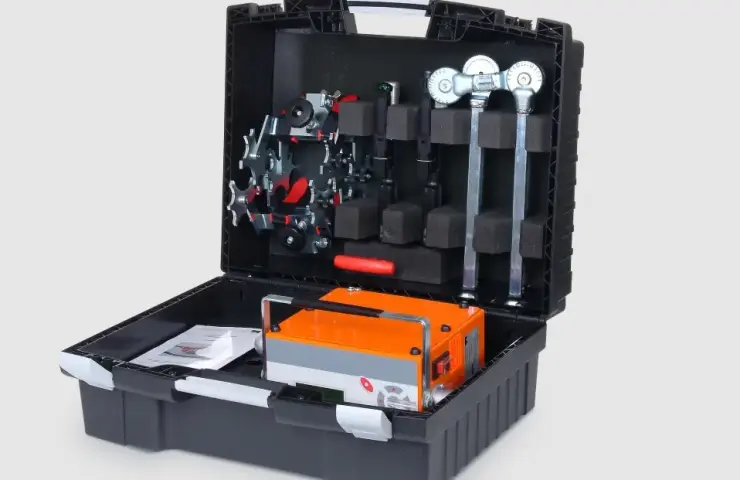
Plastic protective cases are widely used for storing and transporting equipment, tools, and sensitive equipment. Their main task is to protect the contents from mechanical damage, moisture, dust and other external influences. Plastic cases are used in industry, construction, medicine, photography and video, logistics, as well as in field and expedition environments where packaging reliability plays a key role.
Design features and materials
Modern protective cases are made of durable polymer materials that are resistant to shocks, temperature changes and aggressive environments. The body usually has a reinforced structure with stiffeners, which allows it to withstand significant loads without deformation. Many models are leak-proof: tight seals and reliable locks prevent water and dust from getting inside, which is especially important when operating outdoors.
The internal space of the cases can be organized in different ways. Foamed filler is often used, which can be trimmed to fit the shape of specific equipment. This allows you to fix the contents and minimize the risk of damage during transportation. In some cases, modular partitions or lodgments are used, designed for serial placement of devices.
Where plastic protective cases are used
Due to their versatility, plastic cases are used in a wide variety of fields. They are used both for professional tasks and for household needs. The most common applications include:
-
Transportation of measuring instruments and electronics;
-
Storage of photo and video equipment;
-
Protection of medical and laboratory equipment;
-
Transportation of tools and components;
-
Use in military, rescue and expeditionary work.
Such cases are convenient because they provide standardized protection regardless of operating conditions. They work equally effectively both in warehouses and in conditions of high humidity, dust or vibration.
Practical value and durability
Plastic protective cases are appreciated for their long service life and minimal maintenance requirements. Polymer materials are not susceptible to corrosion, do not require special care and retain their properties even during intensive use. This makes them a practical solution for applications where reuse and stable protection of equipment are important.
In addition, the unified sizes and shapes of the cases simplify storage and logistics. They can be stacked and placed in transport compartments.