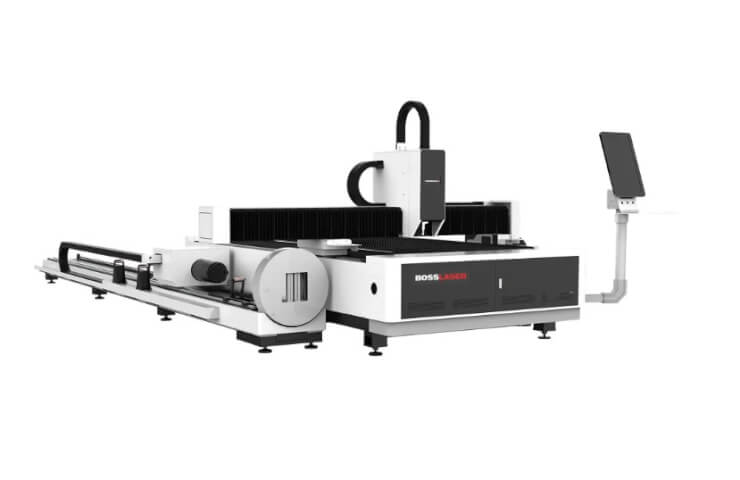
Metalworking is increasingly using automated technologies to improve the precision of manufacturing parts and reduce the time required to complete production operations. Laser cutting machines for metal have become one of the most popular types of equipment. They are used in the manufacture of structures, components, equipment elements and other products where precision geometry and stable processing quality are important.
Operating principle and advantages of the technology
The laser beam concentrates energy on a small area of the material, so that the metal is cut along a given trajectory. Modern machines are controlled using numerical control software, which allows you to perform complex contours and repeat operations with high accuracy.
One of the main advantages of laser technology is the minimal mechanical impact on the workpiece. The tool does not come into contact with the surface as it does with traditional machining. This helps to get a neat cut and reduce the need for further refinement of parts.
How to choose the production equipment
When selecting a laser machine, it is necessary to take into account the tasks of a particular enterprise. The type and thickness of the metal being processed, the dimensions of the desktop, the required productivity and the features of the products are important. For mass production, processing speed and the ability to integrate equipment into an existing technological process are especially important.
You should also pay attention to the power of the laser source, the control system and the convenience of maintenance. A well-chosen configuration avoids both a lack of performance and unjustified costs for equipment with redundant characteristics.
Prospects for automation of metalworking
The development of laser technologies is associated with further automation of production. Modern complexes can be supplemented with systems for loading and unloading sheet metal, software for preparing control programs and process control tools.
The use of laser cutting allows enterprises to flexibly respond to product range changes and fulfill orders of varying complexity. With the right choice of equipment, technology becomes an effective tool for increasing productivity, improving the quality of parts and developing modern metalworking production.